100+ Short Horror Stories: Read or Listen for Free
Explore our Ultimate Collection of Spine-chilling Tales with Immersive Audio Narrations
Loading stories...
Showing 20 stories of 47 total
Behind Room 214
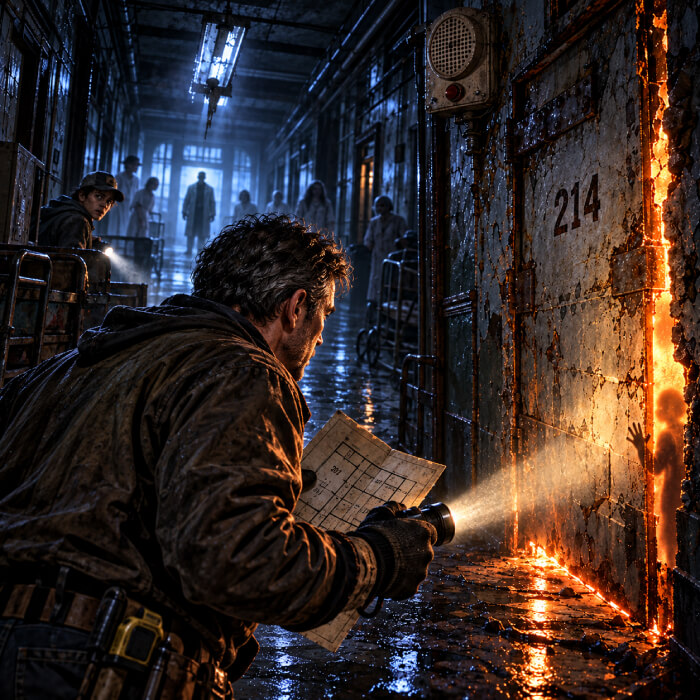
In 2003, Daniel takes a temporary cleanup job inside an abandoned Colorado institution scheduled for demolition. What begins as ordinary work quickly turns unsettling when an old intercom starts calling names, a sealed door appears where no room should exist, and the number 214 keeps showing up where it doesn't belong. As Daniel and his friend Eric dig deeper, they discover that the building may be holding onto more than abandoned furniture and forgotten records. Voices echo through dead speakers, people appear in empty hallways, and a hidden room seems to remember those who were once reduced to nothing more than numbers. But leaving the building doesn't mean leaving Room 214 behind. Years later, Daniel learns that some places don't disappear when they're demolished and some rooms are still waiting for someone to fill the last empty bed.
The Light at Mile 19
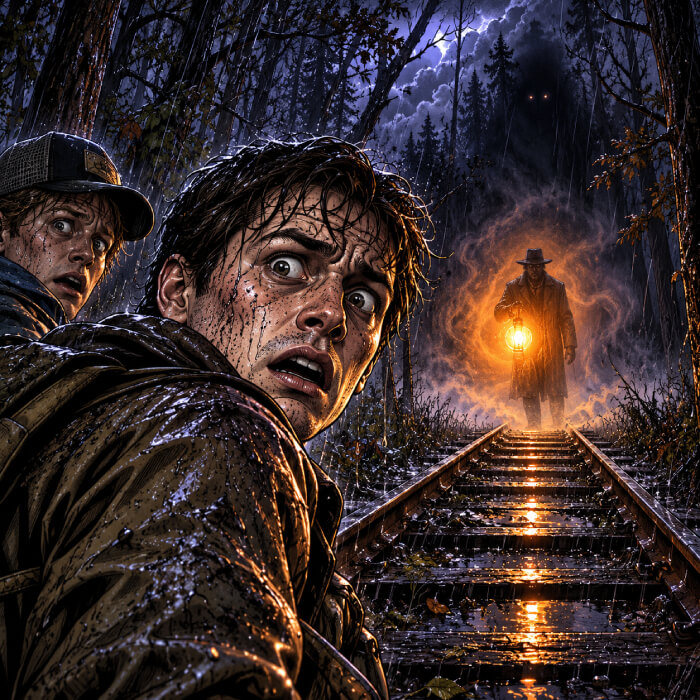
Two friends head deep into the Arkansas woods to investigate a strange light said to appear along an abandoned stretch of railroad tracks. What begins as a late-night thrill quickly turns into something far more disturbing when the light starts following them home. As the sightings grow closer, old disappearances and forgotten names begin to surface. Soon, the terrifying truth becomes clear: the light isn't hunting anyone. It's trying to warn them. But whatever walks behind it doesn't just make people disappear. It erases every trace that they ever existed.
The Woman Who Walks Children Home
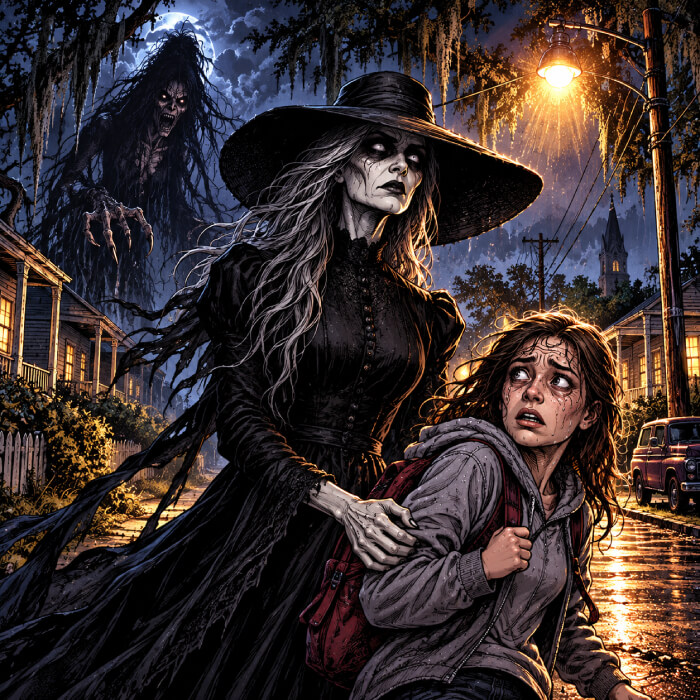
In a quiet Alabama town, children grow up with one simple warning: be inside before the streetlights come on. Locals say a towering woman in black roams the roads after dark, grabbing children who stay out too late and whispering something into their ears. Years after a terrifying childhood encounter, one man returns home and discovers the legend was never what everyone believed. The frightening woman haunting the streets may not be hunting children at all. She may be protecting them from something far worse. But when the same mysterious figure appears outside his own daughter's home decades later, he realizes the danger was never buried with the town's darkest secret. Something else has been waiting beyond the streetlights, and even the ghost seems afraid of it.
Don't Sit Up
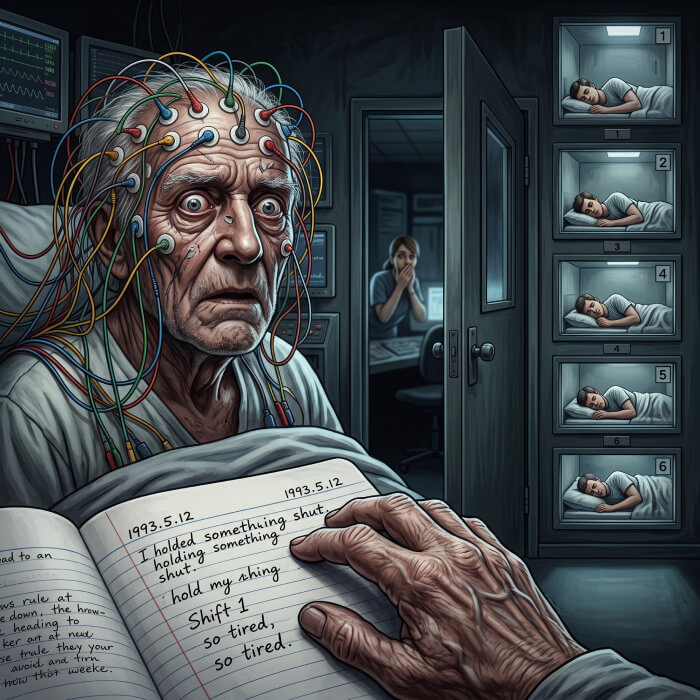
Some prisons don't have guards. They have shifts and somebody has to take one. Curtis blacked out at a four-way stop with thirty-one kids on his bus, so the district sent him for a sleep study: a small room, thirty wires, a camera in the ceiling, and a tech named Rhonda with three rules, the last of which is don't sit up. He sits up. Beyond the door are six rooms holding six sleeping men at six different ages, all of them him, and a hand-ruled logbook going back to 1993 in handwriting he recognizes because it's his own. Don't Sit Up is a quiet, claustrophobic horror about the part of yourself you've been staying awake to hold shut and how tired a person gets after thirty years of doing it alone.
Slack Water
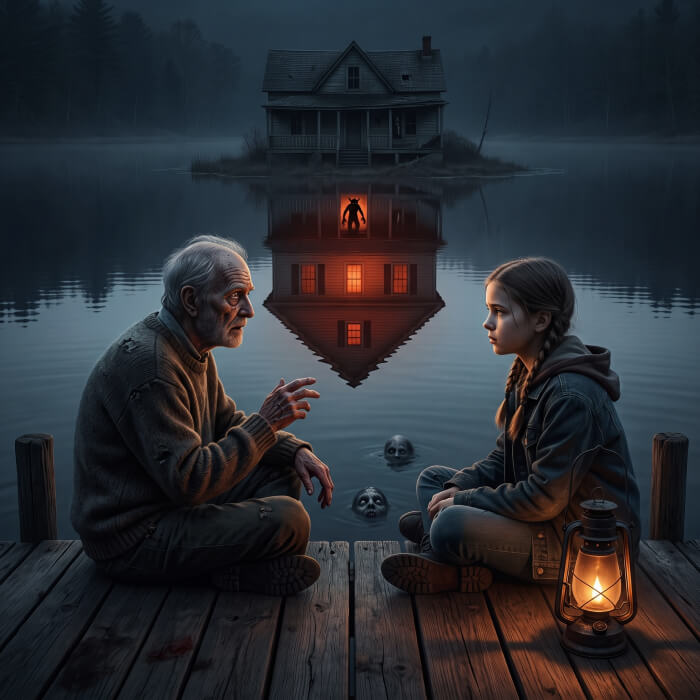
Some hauntings don't repeat because they're unfinished. They repeat because someone keeps starting them over. Emma drives her failing stepfather out to the lake where her sister drowned twenty-two years ago, carrying a recorder and a plan, certain that a mind coming apart will finally give up the truth. It does. But the confession James has been holding since 2002 doesn't name the monster she came for, and the fresh brass padlock on the boathouse of a house nobody has visited in two years is answered by a key that has been in her own coat pocket the whole drive. Slack Water is a cold, quiet psychological horror about memory as a load-bearing wall, the mercy of forgetting, and a man who has spent half his life waiting to be let go.
I Think I Was Chosen
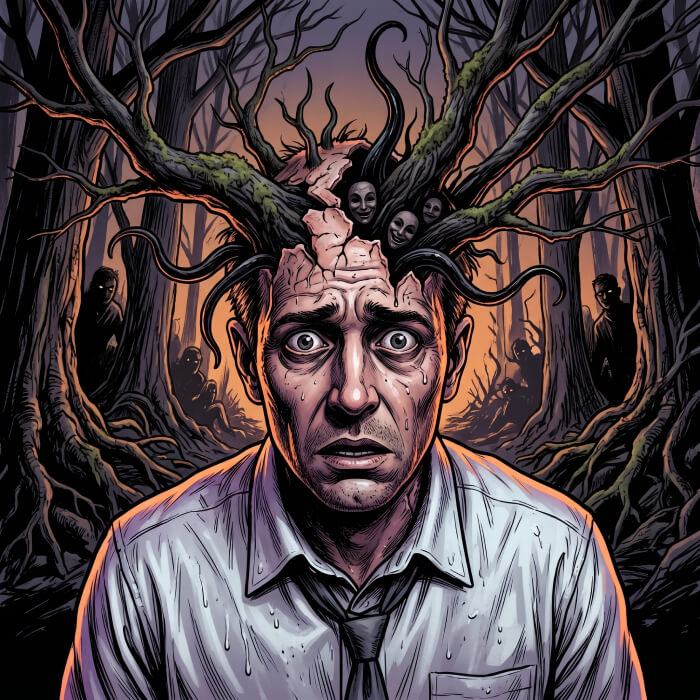
When a lonely office worker is invited into a welcoming community hidden in the woods, it feels like the meaningful connection he's been missing for years. The people are kind, the atmosphere is comforting, and for the first time in a long while, he feels like he belongs. But strange comments, unsettling attention, and a growing sense that everyone knows something he doesn't begin to turn that comfort into dread. This is a psychological cult horror story about loneliness, manipulation, and the terrifying realization that some invitations are impossible to decline—even after you've escaped.
The Dead Must Stay
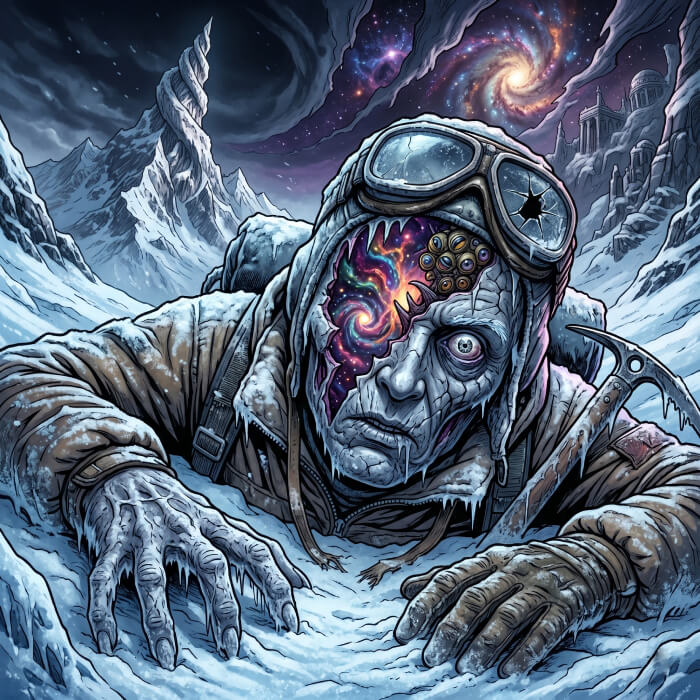
A logistics specialist joins a high-profile mission to recover the frozen dead of Mount Everest, expecting danger, exhaustion, and impossible conditions. But as strange disappearances mount and local warnings grow harder to ignore, he begins to suspect the mountain is hiding something far older than anyone realizes. This is a cosmic horror story about forbidden truths, ancient fears, and the chilling possibility that some things are buried for a reason.
The Window That Watched Back
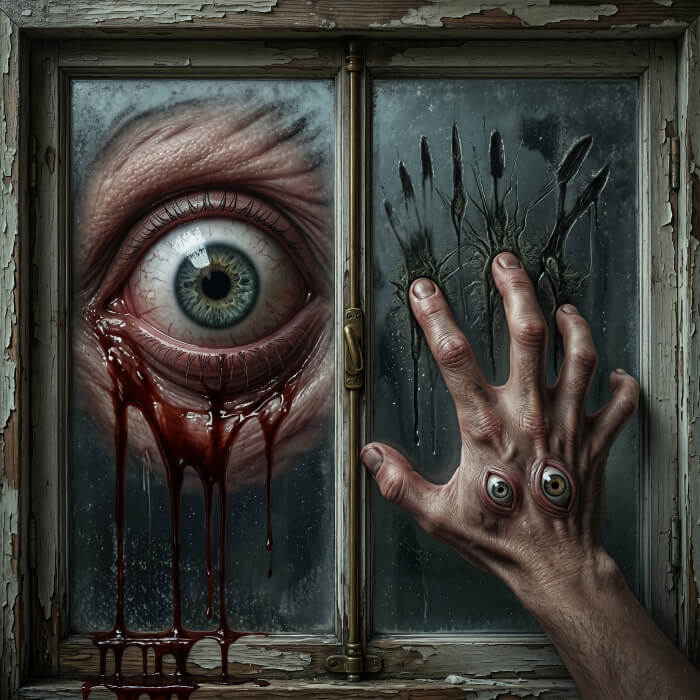
Some places don’t trap you. They keep you. In the quiet after a long walk, when exhaustion dulls instinct and darkness makes strangers of familiar paths, Oliver Bennett finds shelter where there should be none—a solitary cabin waiting in the woods like a held breath. Inside, the walls are crowded with smiling faces that feel less like decoration and more like witnesses. By morning, the faces are gone. In their place stand windows—too many, too clean, all looking out onto the same unmoving forest. No trail. No distance. No direction. Only the slow realization that the cabin is not abandoned, and never has been. The Windows That Watched Back is a psychological horror about stillness, observation, and the quiet machinery of places that do not chase their victims—because they know patience always wins.

The Honey Smell
Fear isn't always sudden. Sometimes it accumulates, in the sweetness of decay, in the patience of the earth, in the things you follow without meaning to. In the forgotten woods beyond the trail, curious James seeks solitude from a collapsing marriage—until the scent and a dead man's gratitude prove that curiosity can be contagious. The Sweet Ones are no ghosts, no revenants with warnings or regrets. They are transformation made patient, a living fermentation that recruits those who cannot resist knowing what waits in the dark. The Honey Smell is a claustrophobic, psychological horror about attraction, organic process, and the terrible generosity of becoming in a ground that digests slowly.
The Ledger of Backbend
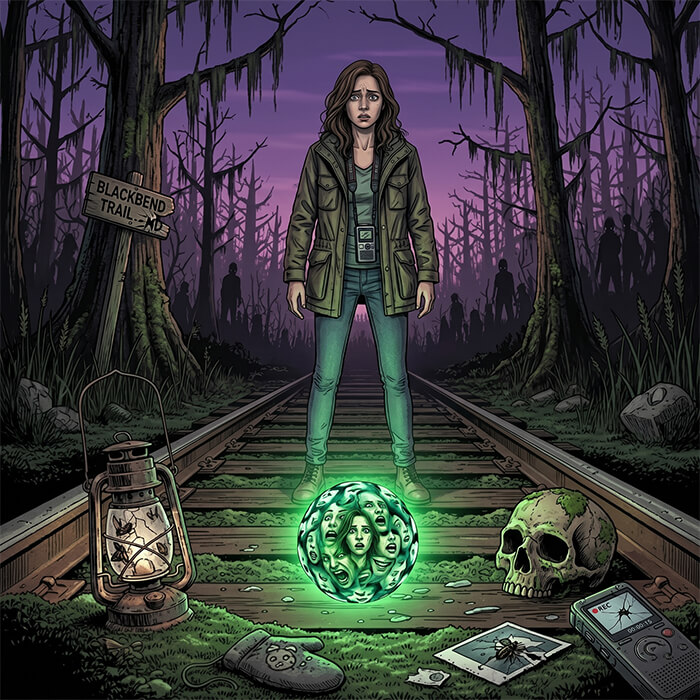
Curiosity isn't always innocent. Sometimes it arrives with a recorder and a camera, in the spaces between what we document and what we summon. In the forgotten rail town of Blackbend, journalist Evelyn collects ghost stories the way others collect stamps, until the light proves that some legends bite back. The Wisp is no phantom, no residue of old violence. It is attention made manifest, a hunger that learns the names of those who speak of it, wearing their faces and voices like borrowed clothes. The Ledger of Backbend is a creeping, atmospheric horror about viral folklore, the architecture of belief, and the terrible price of being known by something that was never meant to remember.
The Crying Canyon
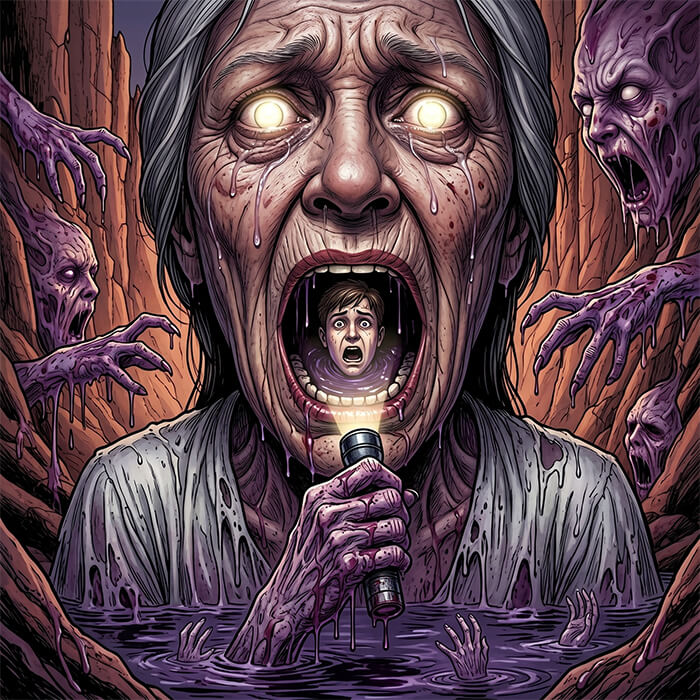
Grief doesn't always end, it echoes. It waits in the hollow places of the earth, in the silence between heartbeats, in the certainty that the dead stay buried. In the desolate reaches beyond Luana's Canyon, disbelief is a luxury that Henry cannot afford. He arrives with laughter on his lips and skepticism in his bones, certain that ghost stories are just folklore for empty spaces. But the canyon remembers what the world forgets. The Weeping Woman is no phantom of sorrow, she is hunger itself, a maternal absence that fills empty vessels with her endless searching, trading places with those who doubt deeply enough to become her next hollow shell. Slaughterhouse Canyon is a suffocating descent into generational tragedy, the parasitic nature of grief, and the terrible price of curiosity in places where the earth itself refuses to let go.
The Second Hug
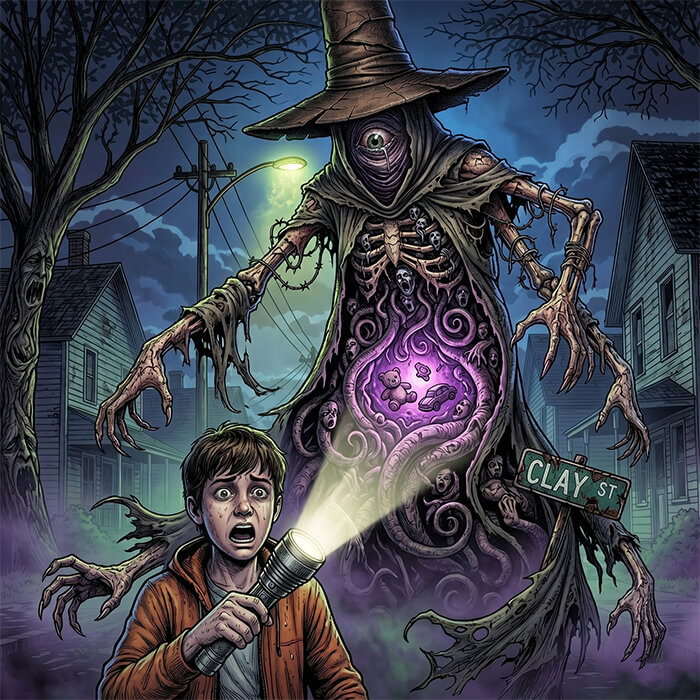
In the town of Abbeville, kids grow up hearing the same rule: be home before the streetlights stop flickering. No one explains it. Parents just say it the way people repeat something old and serious, like a warning that stopped needing reasons. James has never believed the stories. The legend of a towering woman wandering the streets at night, arms open wide, sounds like nothing more than a scare tactic for bored adults and nervous kids. So one night, determined to prove everyone wrong, he walks straight into the quietest road in town long after midnight. What he finds in the stillness of Clay Street isn’t a prank, and it isn’t a rumor. Because some rules aren’t meant to protect you from the dark… they’re meant to protect the dark from noticing you.
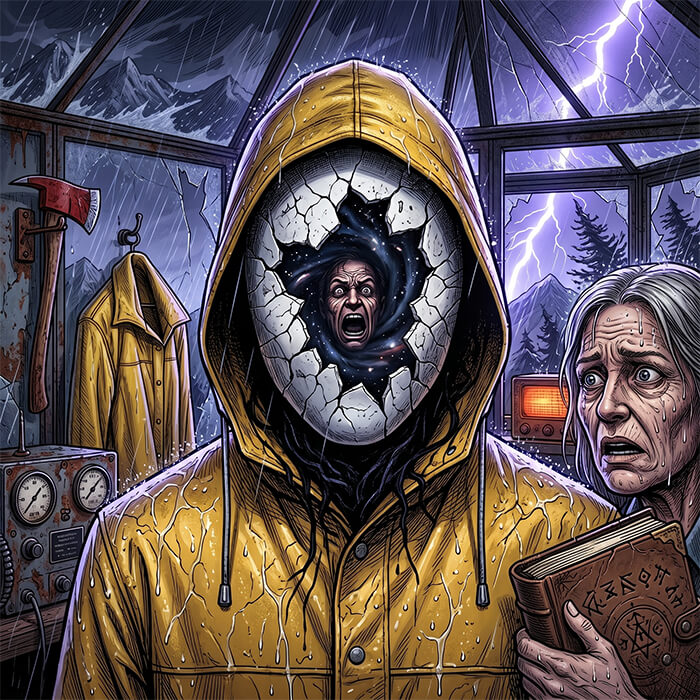
The Shape of Nothing
Fear isn’t always loud. Sometimes it waits in reflections, in the corners of certainty, in the things you insist don’t exist. In the isolated Fire Tower Four, skeptic Arthur dismisses legends as childish nonsense—until the storm and a companion’s warning prove that denial can be deadly. The Inverse Man is no ghost, no monster with claws or fangs. He is the void made flesh, a living absence that trades places with those who are absolutely certain he isn’t real. The Shape of Nothing is a tense, psychological horror about skepticism, cosmic rules, and the terrifying cost of certainty in a world that refuses to honor it.
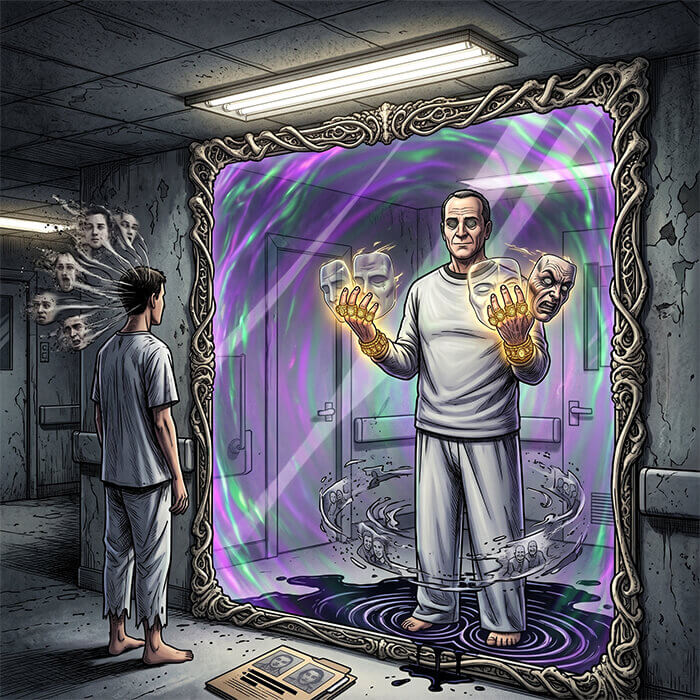
The Man They Say Never Existed
Every town has a rumor it pretends not to believe. He appears ordinary—easy to forget, impossible to ignore. If you meet his eyes, something slips away: a memory, a certainty, the feeling that your thoughts are entirely your own. People insist he isn’t real. Doctors have names for him. Files explain him neatly. But the gaps remain. As sightings accumulate and lives begin to thin at the edges, one rational mind follows the trail too closely and discovers the most dangerous truth of all: some predators don’t stalk bodies—they curate identities. The Man They Say Never Existed is a psychological horror about memory theft, institutional gaslighting, and the terror of realizing your doubts were never your own.
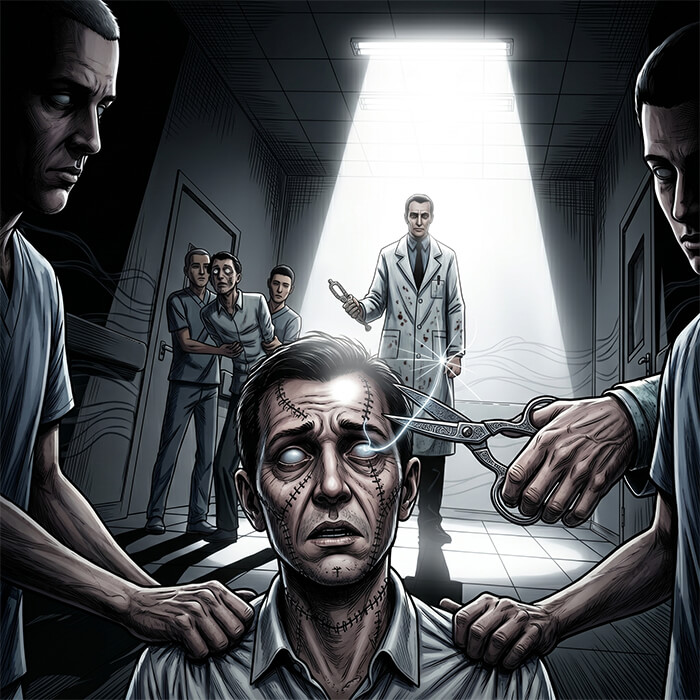
The Final Fitting
Fear is an artisan. Arthur thought he was telling a story, warning others of a monstrous tailor who reshapes souls with silver shears. But the lines between fiction and reality blur when the Tailor of Solace exists not in shadowy alleys, but in stark white corridors, under the fluorescent glare of a hospital. His instruments aren’t magical—they’re clinical. His work isn’t fantasy—it’s systematic. The Final Fitting is a psychological horror about the cost of compliance, the fragility of identity, and the terror of being measured, cut, and remade until nothing of you remains but the shape someone else designed.
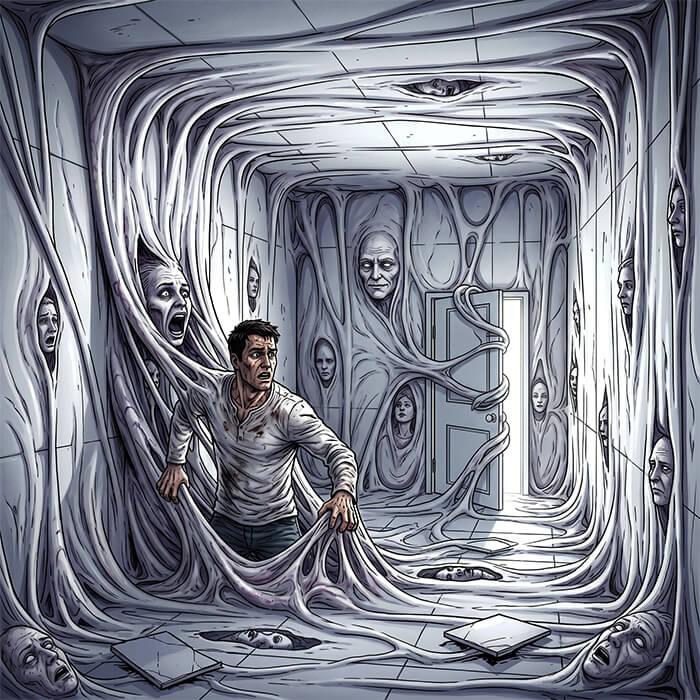
White Enough to Forget The Name
In Virel, punishment is usually a spectacle. For Rowan Hale, it is an omission. Condemned without ceremony, Rowan is sealed inside a flawless white room that shrinks, listens, and remembers. At first, it is a machine. Then it speaks. Then it learns. As the walls close and time dissolves, Rowan uncovers the city’s most carefully hidden truth: justice here is not about death, but absorption. The White Room is a psychological horror about bureaucratic cruelty, living infrastructure, and the terror of realizing you were never meant to survive—only to become part of the system.
The Room That Hated Me
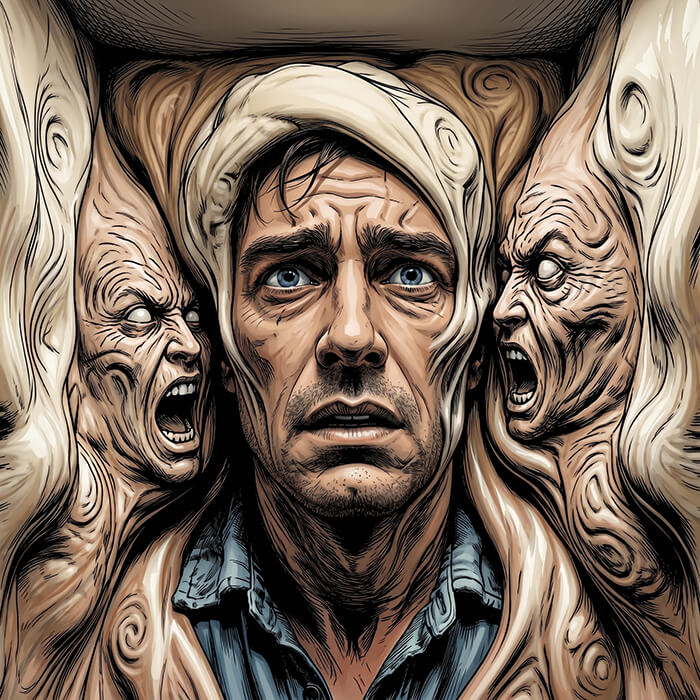
In Darswyn, executions are not meant to end lives—they are meant to be remembered. Callum Hargrove is condemned not to the blade, but to a perfect white room designed to punish defiance slowly. At first, it seems empty. Harmless. Then the walls begin to move. The space tightens. Time dissolves. And the truth reveals itself: the room is alive, aware, and learning him inch by inch. As pressure replaces air and whispers replace silence, Callum discovers the king’s cruelest innovation—a prison that doesn’t kill its victims. It keeps them.
After Midnight, Before Belief
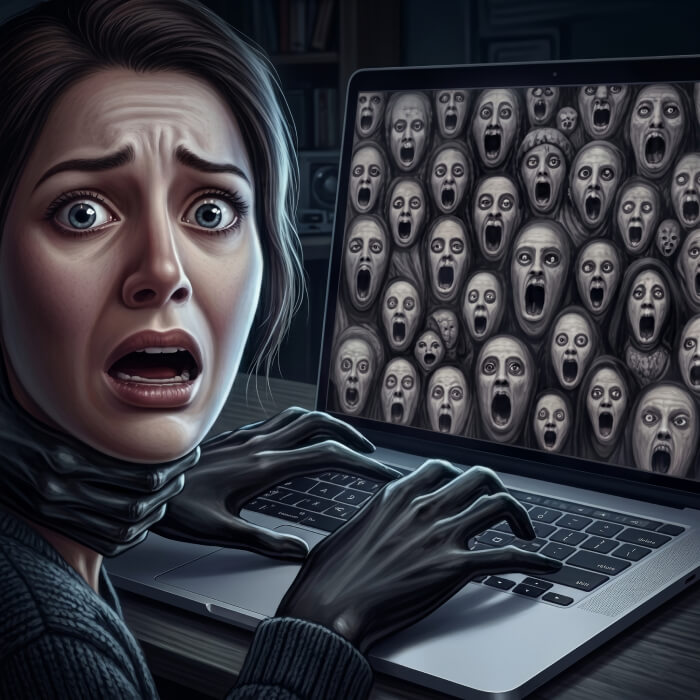
Real News only appears when you aren’t looking for it. Hidden behind forgotten links and sleepless scrolling, the site claims to publish events that haven’t happened yet—disasters prevented, lives quietly saved. It asks only one thing in return: that you follow the rules. Read at the right hours. Come back every night. Never read certain names. At first, it feels like a game. Then the site starts responding. Lights turn on. Walls knock back. And when the foreword finally asks for help, leaving proves far more dangerous than staying. Real News is a psychological horror about forbidden knowledge, predatory information, and the terrifying idea that some stories don’t report reality—they create it.
The Subscription of Souls
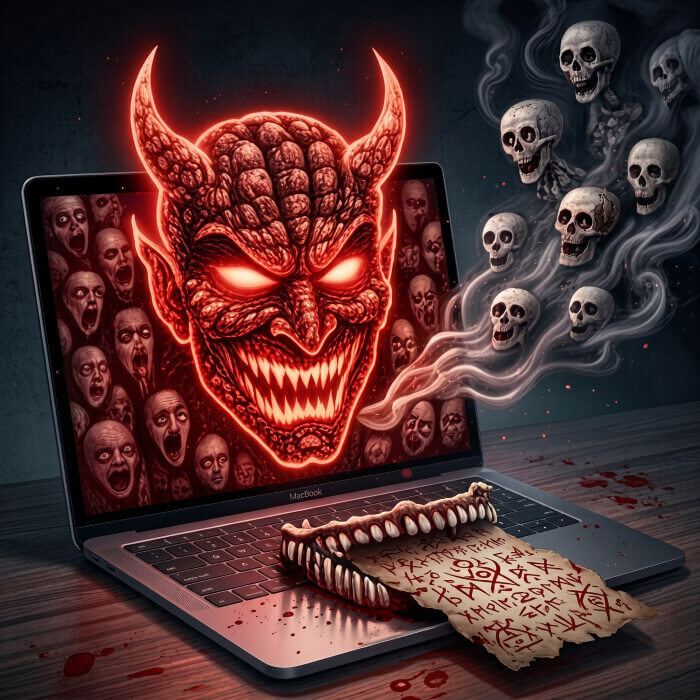
Money fixes everything. That’s the lie that opens the door. Crushed by debt and desperation, he clicks a joke that shouldn’t work—and it does. Wealth floods in effortlessly, luxuriously, obscenely. Bills vanish. Fear dissolves. Life becomes a celebration. But contracts are patient things, and eternity has a way of arriving late. When the collector comes, he doesn’t take a life—he takes meaning. Pleasure fades. Identity thins. And then the truth emerges: the sale was only the beginning. His soul isn’t owned by one demon, but by many. Watched. Subscribed to. Broken into fragments and resold to strangers who crave suffering like entertainment. SoulMart is a modern psychological horror about capitalism without limits, digital damnation, and the quiet terror of discovering you were never a person—only inventory. In a marketplace that never closes, the most valuable commodity isn’t wealth. It’s you.
Scale Matters
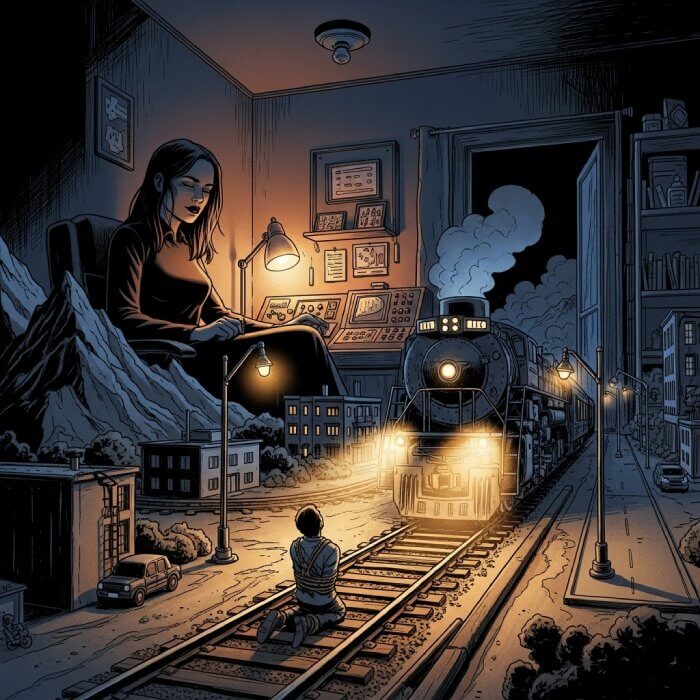
He thought confidence was control—until he stepped into a world where precision meant power. What begins as a seductive dinner with a woman who refuses to play by social rules descends into a meticulously crafted nightmare, where arrogance is measured, reduced, and repurposed. As boundaries collapse and scale becomes punishment, he learns too late that some people don’t argue with dominance—they redesign it. This is a psychological horror story about obsession disguised as order, misogyny reduced to scale, and the terror of realizing you were never being tested—you were being curated.
Unlock All Stories
Create a free account to access our complete collection of short horror stories, bookmark your favorites, and get personalized recommendations.
Premium Stories
Exclusive
The Window That Watched Back
Some places don’t trap you. They keep you. In the quiet after a long walk, when exhaustion dulls instinct and darkness makes strangers of familiar paths, Oliver Bennett finds shelter where there should be none—a solitary cabin waiting in the woods like a held breath. Inside, the walls are crowded with smiling faces that feel less like decoration and more like witnesses. By morning, the faces are gone. In their place stand windows—too many, too clean, all looking out onto the same unmoving forest. No trail. No distance. No direction. Only the slow realization that the cabin is not abandoned, and never has been. The Windows That Watched Back is a psychological horror about stillness, observation, and the quiet machinery of places that do not chase their victims—because they know patience always wins.
The Man They Say Never Existed
Every town has a rumor it pretends not to believe. He appears ordinary—easy to forget, impossible to ignore. If you meet his eyes, something slips away: a memory, a certainty, the feeling that your thoughts are entirely your own. People insist he isn’t real. Doctors have names for him. Files explain him neatly. But the gaps remain. As sightings accumulate and lives begin to thin at the edges, one rational mind follows the trail too closely and discovers the most dangerous truth of all: some predators don’t stalk bodies—they curate identities. The Man They Say Never Existed is a psychological horror about memory theft, institutional gaslighting, and the terror of realizing your doubts were never your own.
Top Free Stories
The Second Hug
In the town of Abbeville, kids grow up hearing the same rule: be home before the streetlights stop flickering. No one explains it. Parents just say it the way people repeat something old and serious, like a warning that stopped needing reasons. James has never believed the stories. The legend of a towering woman wandering the streets at night, arms open wide, sounds like nothing more than a scare tactic for bored adults and nervous kids. So one night, determined to prove everyone wrong, he walks straight into the quietest road in town long after midnight. What he finds in the stillness of Clay Street isn’t a prank, and it isn’t a rumor. Because some rules aren’t meant to protect you from the dark… they’re meant to protect the dark from noticing you.
The Subscription of Souls
Money fixes everything. That’s the lie that opens the door. Crushed by debt and desperation, he clicks a joke that shouldn’t work—and it does. Wealth floods in effortlessly, luxuriously, obscenely. Bills vanish. Fear dissolves. Life becomes a celebration. But contracts are patient things, and eternity has a way of arriving late. When the collector comes, he doesn’t take a life—he takes meaning. Pleasure fades. Identity thins. And then the truth emerges: the sale was only the beginning. His soul isn’t owned by one demon, but by many. Watched. Subscribed to. Broken into fragments and resold to strangers who crave suffering like entertainment. SoulMart is a modern psychological horror about capitalism without limits, digital damnation, and the quiet terror of discovering you were never a person—only inventory. In a marketplace that never closes, the most valuable commodity isn’t wealth. It’s you.
White Enough to Forget The Name
In Virel, punishment is usually a spectacle. For Rowan Hale, it is an omission. Condemned without ceremony, Rowan is sealed inside a flawless white room that shrinks, listens, and remembers. At first, it is a machine. Then it speaks. Then it learns. As the walls close and time dissolves, Rowan uncovers the city’s most carefully hidden truth: justice here is not about death, but absorption. The White Room is a psychological horror about bureaucratic cruelty, living infrastructure, and the terror of realizing you were never meant to survive—only to become part of the system.
After Dark
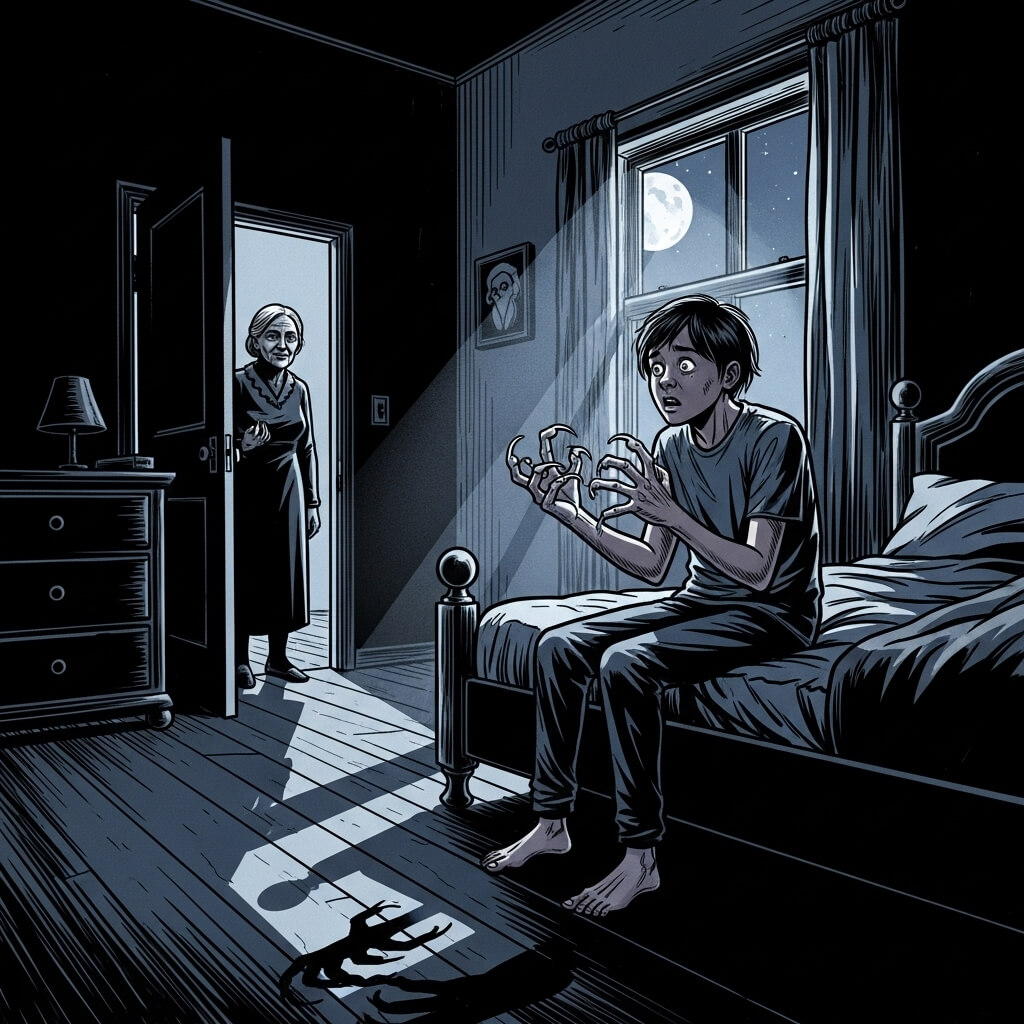
Some rules aren’t meant to be understood—only obeyed. The warnings were simple. Don’t whistle after dark. Don’t cut your nails at night. Don’t linger in mirrors when the sun goes down. The protagonist laughs them off as village superstition—until the night begins to answer back. At first, it’s subtle: a sound in the dark, a reflection that lingers too long. Then pieces of the body begin to rebel, growing, separating, remembering where they came from. What creeps through the house isn’t just watching—it’s reclaiming. After Dark is a supernatural psychological horror about inherited fear, ancestral knowledge, and the terror of realizing that the body can betray you long before the mind catches up. Because some traditions aren’t myths—they’re boundaries. And crossing them means something else gets to come through.
Don't Sit Up
Some prisons don't have guards. They have shifts and somebody has to take one. Curtis blacked out at a four-way stop with thirty-one kids on his bus, so the district sent him for a sleep study: a small room, thirty wires, a camera in the ceiling, and a tech named Rhonda with three rules, the last of which is don't sit up. He sits up. Beyond the door are six rooms holding six sleeping men at six different ages, all of them him, and a hand-ruled logbook going back to 1993 in handwriting he recognizes because it's his own. Don't Sit Up is a quiet, claustrophobic horror about the part of yourself you've been staying awake to hold shut and how tired a person gets after thirty years of doing it alone.
The Quiet Place He Kept
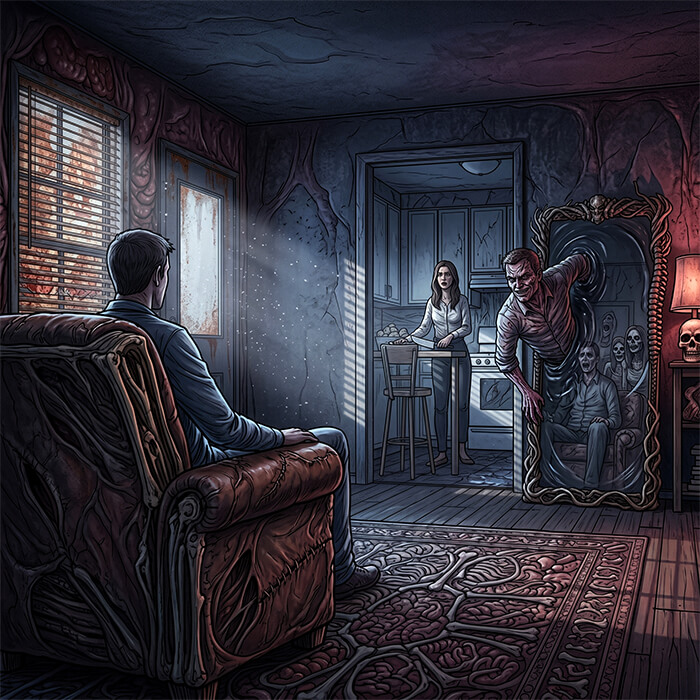
A late-night ATM stop becomes the first encounter with a double who enforces consequences no one else can see. Each reappearance is timed to moments of weakness, turning guilt into something physical and inescapable. As fear drives the narrator toward a quieter, more careful life, the violence stops—long enough to feel like progress. But some versions of justice don’t disappear when lessons are learned. They wait, patient and unfinished, for their turn to take over.
Staying Close
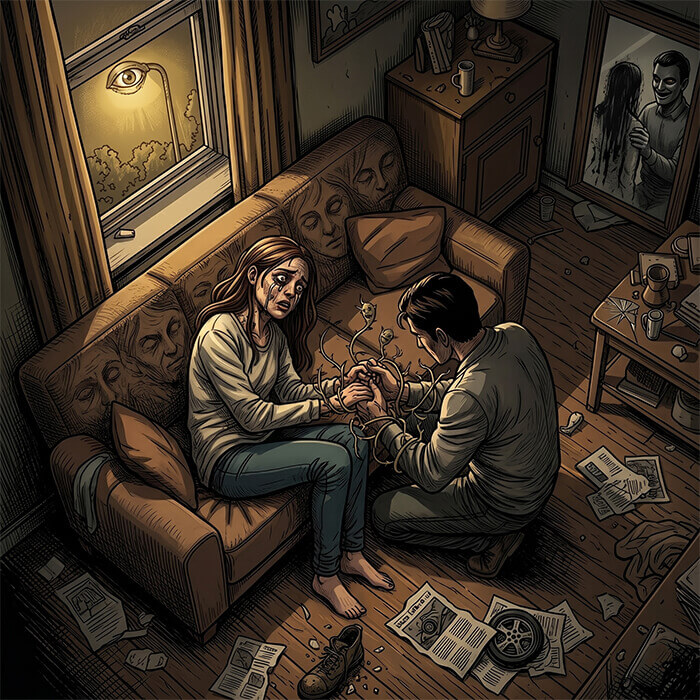
Love makes a convincing excuse. After the crash, Lena can’t stop crying. She doesn’t remember what happened—not clearly—and that’s fine. The narrator remembers enough for both of them. Enough to keep her calm. Enough to keep her close. Enough to make the night quieter. As hours pass, Lena’s fear grows sharper, her questions more dangerous. The narrator answers them with reassurance, with restraint, with hands that never mean to hurt. Every decision is framed as protection. Every act of control is called care. And guilt is smoothed over with the certainty that this is what love looks like when it’s necessary. This is a psychological horror about devotion turned delusion, memory reshaped into justification, and the unbearable intimacy of being trapped inside a mind that believes violence is mercy. There are no monsters in the dark—only the quiet terror of someone who truly thinks they’re doing the right thing.
The Bonfire Wasn’t for Dancing
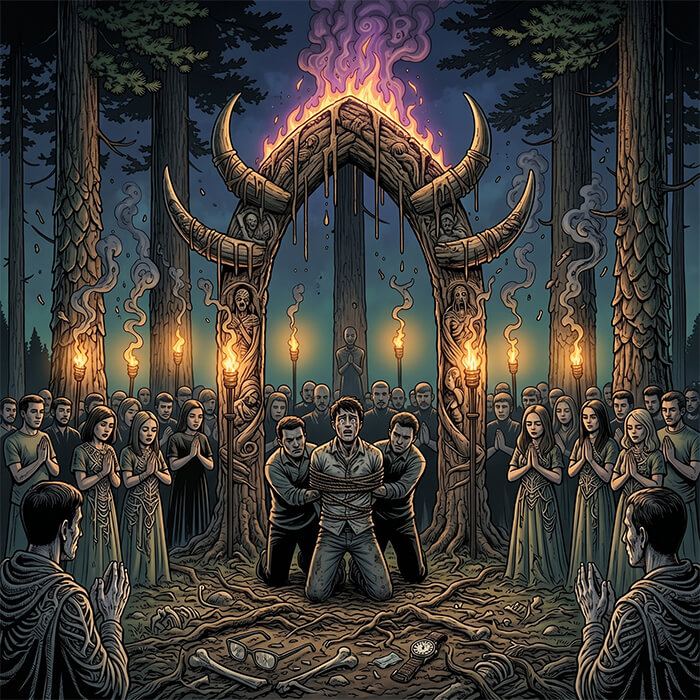
A lonely man searching for belonging joins a church that promises openness, community, and love—but some communities don’t reject outsiders, they reserve them. As faith blurs into ritual and inclusion comes with a price, he learns too late that being unwanted was never the danger. This is a psychological horror story about manufactured belonging, ritualized faith, and the terror of realizing you were never excluded—only saved for sacrifice.
Swipe Right for Delivery
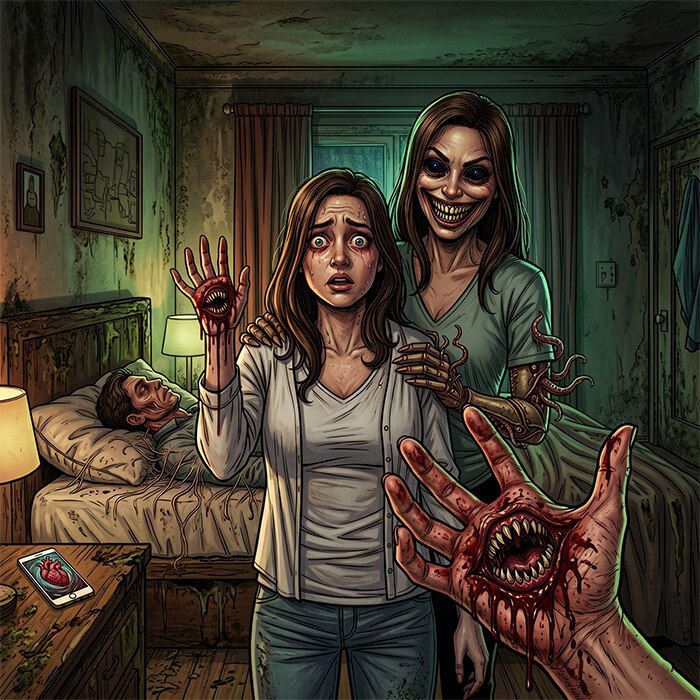
A lonely woman lets her closest friend guide her into dating, trusting the promise that hunger—like love—can be satisfied if you’re honest about it. But some hungers aren’t metaphorical, and some friends aren’t helping you find connection—they’re teaching you what you truly are. As intimacy turns ritual and desire becomes consumption, she discovers that the app was never meant to find love. This is a psychological horror story about manipulation disguised as care, inherited appetites, and the terrifying relief of finally being honest about what feeds you.
The Quiet One
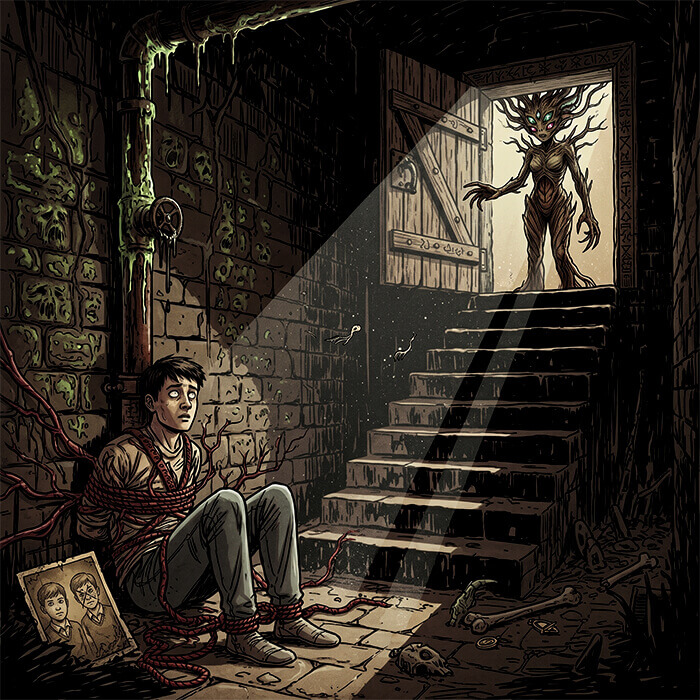
Born a twin, raised to disappear, a quiet child learns that silence is the only way to survive his family’s love. When an inherited curse demands a sacrifice, his parents make their choice without hesitation—binding, testing, and preparing him for something they insist he is not. But houses remember, monsters listen, and blood has a way of correcting mistakes. This is a psychological horror story about inheritance, mistaken purity, and the terror of realizing the thing they feared was never the one they chained in the dark.
The Web's Best Free Horror Library
Let's be honest: finding good horror online is hard. That's why we built this archive. Whether you have five minutes to kill or want a long-form mystery to solve, we have something that will make you check the locks twice. From classic ghost stories to our new immersive audio narrations, everything here is free and terrifying.
Don't Just Read. Listen.
Too scared to look at the screen? Put on your headphones. We are adding professional audio narrations to our best stories every week.
Creepypastas & Classics
We collect everything from viral internet creepypastas to old-school paranormal tales. If it's scary, it belongs here.
Always Free. No Paywalls.
Horror should be accessible. Read thousands of free horror stories without needing a subscription or a credit card.
Midnight Snacks
Most of our tales are short horror stories designed to be read in under 10 minutes. Perfect for a quick thrill before bed.
What kind of horror do you like? If you are into the subtle stuff, check out our psychological thrillers—the kind where the monster is inside your head. If you prefer jump scares and gore, we have plenty of scary stories to read that go straight for the jugular.
We also have a soft spot for true horror stories (the ones that might actually happen to you) and those classic short horror stories with a twist that leave you staring at the ceiling. Whatever your poison, ShortHorrorStories.net is here to ruin your sleep schedule.
High-Quality Audio
Professional narration with immersive sound effects
Regular Updates
New horror stories added weekly
Curated Selection
Hand-picked stories for maximum terror