
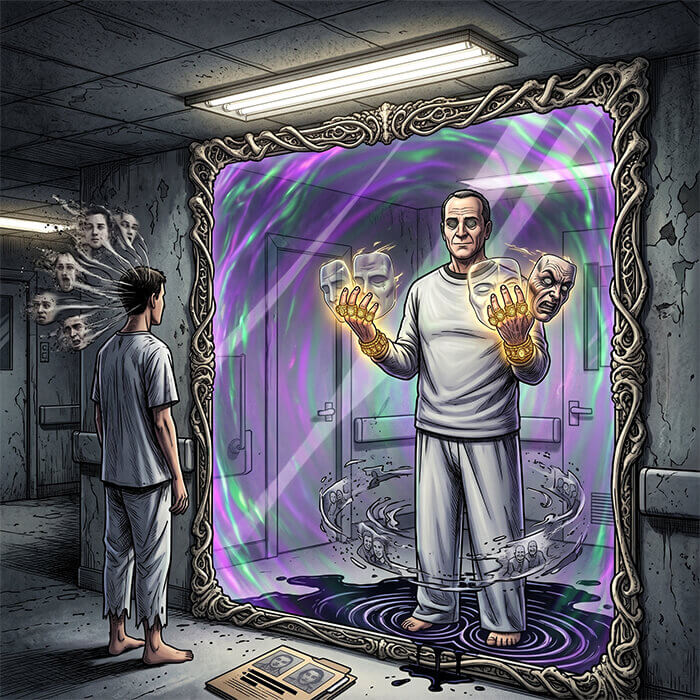
There is a story they used to tell where I grew up, the kind adults pretended not to believe but still lowered their voices for. It wasn’t a campfire legend or a bedtime warning. It was more like a rumor with a pulse—something unfinished that kept breathing long after the teller stopped.
They never agreed on his name.
Some said he wore black like a priest who’d lost his faith. Others swore he dressed plainly, forgettable on purpose. The only detail that stayed consistent was the rings—heavy gold bands on nearly every finger, dull with age, always warm. Too warm.
They said if you saw his eyes clearly, really saw them, you’d lose something before you realized it was gone. Confidence. Memory. The sense that you belonged inside your own body.
I didn’t believe any of it.
I was a rational person. A student. A note-taker. I believed in causes and effects, diagnoses and charts. Stories were stories, and fear was just pattern-seeking dressed up as instinct.
That’s probably why I noticed him before anyone else did.
He started showing up around town in small, forgettable ways. Sitting on a bench outside the library. Standing near the back of the grocery store aisle, staring at canned soup like it had offended him. Once, I saw him across the street from my apartment at three in the morning, just standing there with his hands folded, watching nothing.
Watching me.
I told myself it was coincidence. Cities are full of people like that—lonely men with nowhere particular to be. Still, I began to feel… edited. As if parts of my day were being trimmed away cleanly. Conversations I didn’t remember finishing. Pages of my journal written in handwriting I recognized but didn’t recall forming.
Then the dreams started.
In them, I wasn’t being chased. I wasn’t hurt. I was being studied. I’d sit in a chair in a room that smelled faintly of metal and old paper while a man spoke to me gently, asking questions I didn’t understand until it was too late.
He never touched me in the dreams. He didn’t need to. His voice did all the work.
When I finally spoke to him in real life, it was by accident.
I was in the university archives, late, combing through old local records for a paper on regional folklore—ironic, in hindsight. I heard someone clear their throat behind me.
"I wondered how long it would take," he said.
I turned.
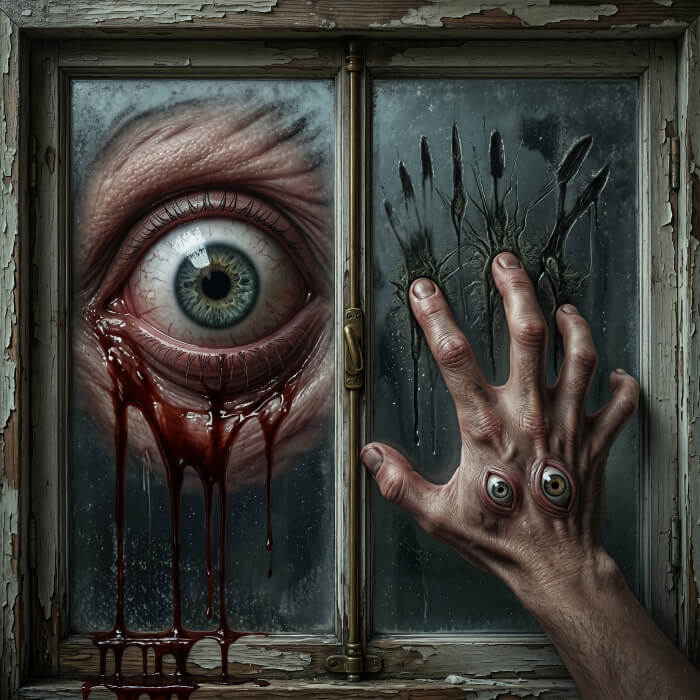
He looked ordinary. Middle-aged. Pale, but not sickly. His clothes were neat and unremarkable. But his hands—his hands were wrong. Thick gold rings hugged his fingers like restraints, etched with symbols I couldn’t focus on for long.
"You’ve been reading about me," he continued, smiling politely.
"I don’t know you," I said.
"Of course you do," he replied. "You just don’t remember when you learned."
I should have walked away. I know that now. But something about him made stillness feel like the safest option.
He talked for a long time. About ideas. About fear. About how fragile the mind really is when handled with care. He never raised his voice. Never threatened. By the end, my legs felt weak, like I’d been standing for hours.
"People think I hurt them," he said as we parted. "But I only show them what’s already inside."
That night, I slept for fourteen hours straight.
When I woke up, my apartment was different. Subtly. Objects were in the wrong place. My phone contained messages I didn’t remember sending. One voicemail stood out—my own voice, whispering, "He’s right."
I stopped going to class. Stopped answering calls. Every time I closed my eyes, I heard his voice, guiding my thoughts like fingers through soft clay. I began writing things I didn’t understand. Diagrams. Lists of names—some crossed out, some circled.
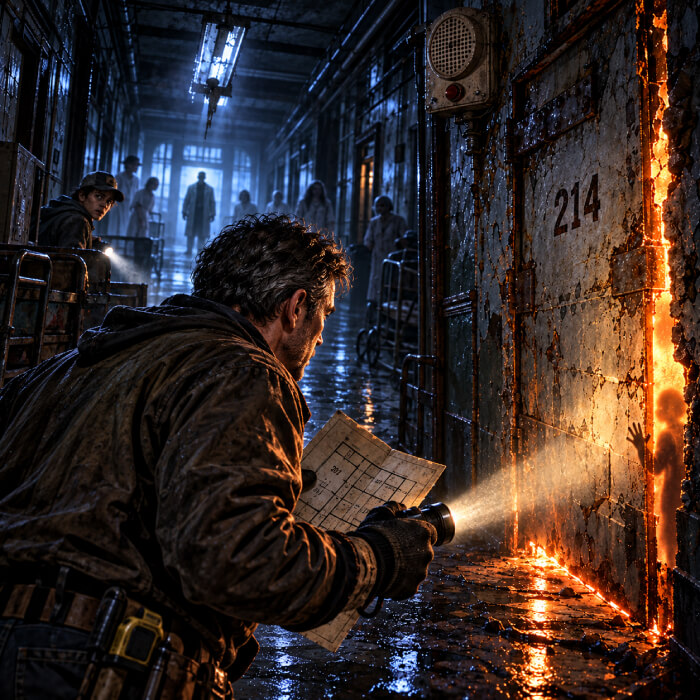
I found myself drawn to an old building on the edge of town, abandoned decades ago. A hospital, once. I don’t remember deciding to go there. I just… arrived.
Inside, the air was sterile in that impossible way—too clean to be real. He was waiting.
"You came willingly," he said, almost proud. "That’s rare."
I tried to speak. My mouth wouldn’t cooperate.
"I don’t need straps," he went on, gesturing to a rusted bed nearby. "Your mind is already doing what it’s told."
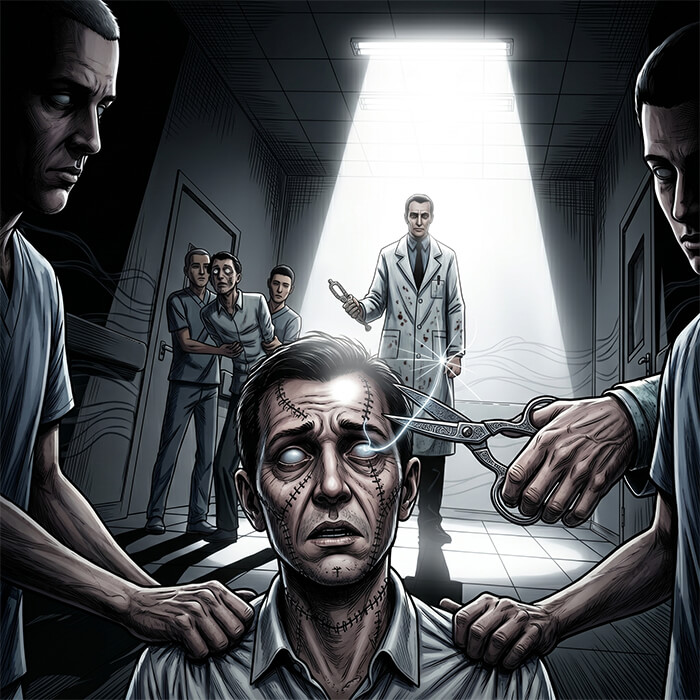
Something cold pressed against my temple. Not pain—pressure. A sensation like a thought being gently removed.
When I woke up, the ceiling was white.
Perfectly white.
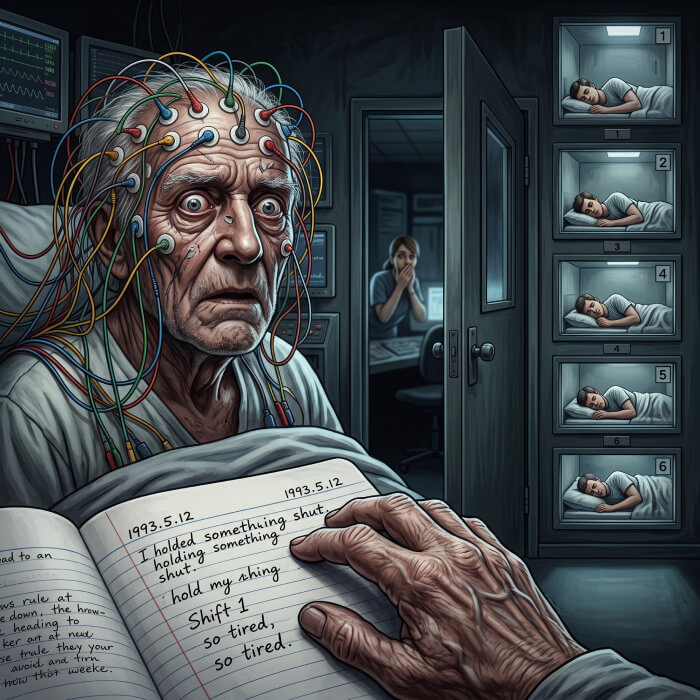
I was lying in a bed, tucked in neatly. My hands were free. My head felt light, hollowed out in places. A woman in a pale uniform sat nearby, writing on a clipboard.
"You had another episode," she said kindly. "Do you remember where you are?"
I did. Of course I did.
They told me my name was Jonah. That I’d been here for years. That I had a condition involving delusions of persecution and grandiose myth-making. The man with the rings was a recurring figure in my narratives—an externalization of guilt, they said.
I nodded. Took my medication. Learned when to smile.
But sometimes, late at night, when the ward is quiet and the lights hum softly, I notice things.
A patient across the hall suddenly going silent mid-sentence, eyes empty. A nurse flinching as if she’s forgotten what she was about to do. And once—just once—I saw a reflection in the glass of the medication cart.
A man standing behind me.
Hands folded.
Rings gleaming.
And when the doctor finally called my name—really called it—I stood and followed, because some habits are hard to break.
After all, he’s very good at what he does.
And now that you’ve heard the story—
Well.
He knows where you are, too.









Comments
0 approved comments
Be the first to comment
No one has said a word about this story yet. Set the tone.