
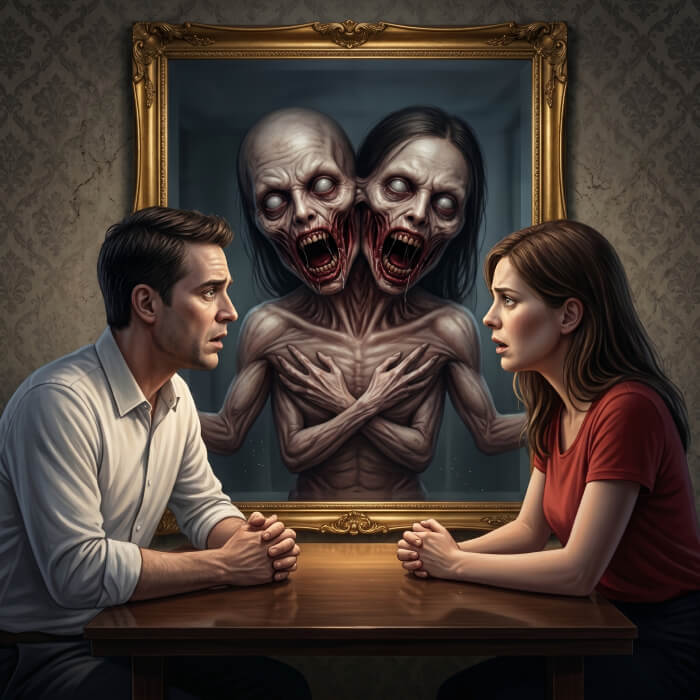
You sit across from me in the restaurant, hands folded too neatly on the table, like you’re afraid of taking up space. I clock that immediately. The way you apologize to the waiter for asking for water without ice. The way your eyes flick to the door every time it opens. You’re already half-gone, even while you’re here.
I chose this place because of the acoustics. Soft jazz, enough clatter to blur individual conversations. No one can overhear us clearly, but everyone can see us. That matters. You like to feel observed—validated—without being known. I learned that years ago.
The candle between us trembles when you laugh. You laugh easily. I made sure of that. I practiced the timing of my pauses, the angle of my smile. I wear the shade of blue you once called “dangerous” when you were drunk at a friend’s birthday party. You don’t remember saying it. I do.
“So,” you say, leaning back, finally relaxing. “This is… surprisingly nice.”
You mean me. You always mean me.
“I told you,” I reply. “First dates don’t have to be awkward.”
You nod, relieved that I’ve lifted the burden of discomfort from your shoulders. That’s what I do best—carry things for people until they forget they were ever heavy.
You don’t notice how carefully I avoid telling you anything verifiable about myself. You don’t ask where I grew up, only whether I like dogs or cats.
Dogs, I say.
You smile. You always smile at that.
You tell me about your job, your boss, your long commute. I already know the route you take home, the exact minute traffic slows near the overpass. I nod in the right places, ask the right follow-ups. You glow under the attention. People always do when they feel understood.
When the wine arrives, I don’t drink. I pretend to. You don’t notice. You’re too busy telling me about the time your college roommate stole your girlfriend.
I keep my expression sympathetic, but inside I catalog the details you get wrong. You always tell this story with yourself as the victim. The truth is messier. It usually is.
Halfway through dinner, your phone buzzes. You glance at it, then flip it face down.
“Sorry,” you say automatically.
“No worries,” I tell you. “I like when people are present.”
You flush.
Another point scored.
You ask me how I know so much about your favorite films, your obscure music taste, the coffee order you swear no one remembers. I shrug lightly, like it’s coincidence.
“We just… click,” I say.
You believe that. People like you always do. You think connection is magic instead of math.
When dessert arrives—your idea, not mine—I let you insist on splitting it. You’ve always liked feeling generous when it costs you very little. I take exactly three bites. You take the rest.
Outside, the night air is sharp. You offer me your jacket. I decline, touching your arm just long enough to make your breath hitch.
That was deliberate.
You don’t pull away.
“Do you want to come back to my place?” you ask, too quickly.
I tilt my head, considering, like I’m weighing desire instead of inevitability.
“Maybe another time,” I say. “I don’t rush things.”
You nod, relieved and disappointed all at once. You like wanting. You just don’t like being wanted back with equal intensity. It scares you.
We walk toward the train station together. You keep matching your stride to mine. I slow down when you do. I speed up when you hesitate. It’s a dance you don’t know you’re dancing.
At the platform, you ask if you can see me again.
I smile. “Of course.”
You exhale, like you’ve been holding your breath all night.
I don’t go home after that.
I sit in my car two blocks away and watch you enter your apartment building through the lobby camera feed I installed last winter. You fumble with your keys, then stop, smiling to yourself. You replay the night, already revising it into something warmer, kinder than most of your memories.
You text me before you reach your floor.
I had a really good time.
I wait exactly six minutes before replying.
Me too.
That’s important. Too fast feels desperate. Too slow feels disinterested. Six minutes feels chosen.
Our second date is quieter. A bookstore café you love but haven’t visited in years because it reminds you of someone you hurt. I suggest it casually. You freeze for half a second, then laugh.
“I can’t believe you picked that place.”
“I have good instincts,” I say.
You don’t argue.
You talk more this time. About your childhood. About the house you grew up in. About the night you and your friends locked a girl in the locker room “as a joke.” You don’t name her. You don’t have to.
You say you’ve changed.
I let you believe I believe that.
By the fourth date, you’re leaving clothes at my place. I rearrange them while you sleep so you think you forgot where you put them. You apologize for being disorganized. I reassure you. I always reassure you.
I never sleep when you do. I watch the way your face slackens, how your mouth falls open. You snore softly. You talk sometimes. Names. Apologies you’ve never made while awake.
One night, you say my name.
It’s not my name.
I don’t correct you.
You tell me you love how “easy” I am. How low-maintenance. How I don’t make demands.
I don’t tell you that ease is just another form of control.
The first crack appears when you cancel plans with me to meet friends you swore you were done with. You text me last minute, adding a laughing emoji like it’s a cushion.
I respond kindly. Always kindly.
Have fun.
You don’t notice I stop sharing pieces of myself after that. You don’t notice when I stop asking questions. You’re too comfortable. You always get comfortable right before things fall apart.
A week later, you forget my birthday.
I never told you when it was.
But you should have remembered the date anyway.
I invite you over on a Sunday. I cook your favorite meal. The one your mother used to make before she got tired of trying. You comment on how authentic it tastes. You don’t ask how I learned the recipe.
After dinner, I ask you something simple.
“Do you ever think about the people you left behind?”
You laugh, uneasy. “That’s random.”
“Humor me.”
You shrug. “I mean… not really. Everyone moves on.”
I watch your reflection in the darkened TV screen as you say it. You look smaller there. Less certain.
“Do you think they forgive you?” I ask.
You frown. “Why wouldn’t they?”
I stand and clear the plates. I rinse them slowly. I let the silence stretch until it becomes uncomfortable.
When I return, you’re scrolling on your phone.
“I should go,” you say. “Early meeting tomorrow.”
“Of course,” I say.
You kiss me absentmindedly at the door. You don’t notice how stiff I am.
The next morning, your alarm doesn’t go off.
You oversleep. Miss the meeting. Your boss calls twice. You don’t hear it because your phone is on silent, a setting you didn’t choose.
By the time you arrive at work, flustered and apologetic, the narrative has already shifted. You feel it in the way people look at you.
Small things keep happening after that. Emails you swear you sent never arrive. Messages appear on your phone that you don’t remember writing. People mention conversations you don’t recall having.
You start drinking more. Sleeping less.
I stay calm. Supportive. The only stable thing in your life.
You cling to me.
One night, you tell me you’re scared.
“I feel like I’m losing control,” you say, voice shaking.
I stroke your hair. “You’re just tired.”
You believe me. You always do.
It ends on a Tuesday. Ordinary. Rainy.
You come home early, key scraping too loudly in the lock. You look pale.
“I need to talk to you,” you say.
I’m already sitting at the table.
“I know,” I reply.
You stop short. “How did you—”
“I know everything,” I say gently.
You laugh, sharp and brittle. “Okay. This isn’t funny anymore.”
I slide my phone across the table. On the screen is a folder. Videos. Messages. Photos.
Your face drains of color as you scroll.
“That’s not—” you begin.
“It is,” I say. “You just forgot.”
You stagger back, knocking into the counter. “You’re sick.”
“Yes,” I agree. “But not for the reasons you think.”
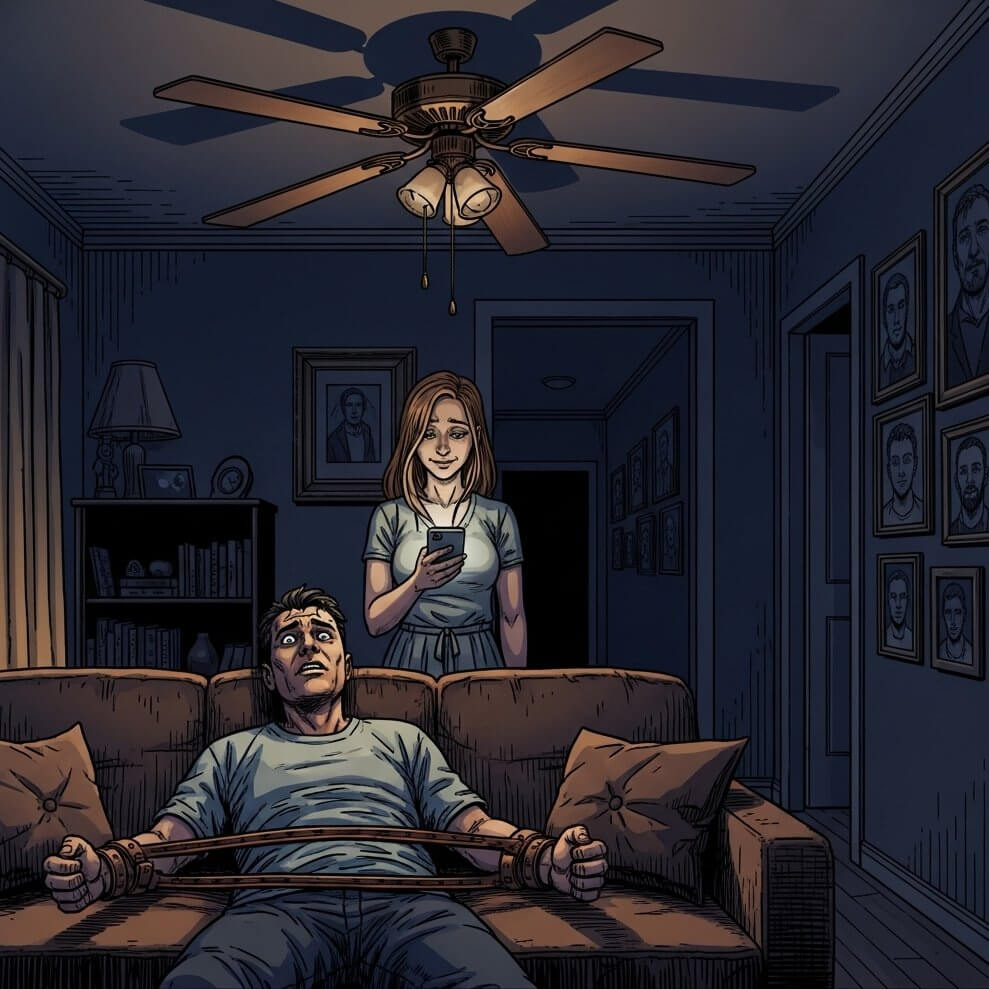
You try the door. It doesn’t open. You look at me, finally afraid.
“What do you want?” you whisper.
I consider that. Truly.
“I wanted you to remember,” I say. “I wanted you to feel seen. The way you made me feel when I couldn’t hide.”
Your mouth opens, closes. Recognition flickers, then dies.
“I don’t know you,” you say.
I smile. “That’s the problem.”
They find you three days later. Dehydrated. Disoriented. You tell them a woman did this to you, but you can’t describe her face. Every detail slips away when you try to hold onto it.
They tell you trauma does that.
I send flowers to the hospital. No note.
You never see me again.
But sometimes, late at night, when your phone lights up with a notification you didn’t expect, you feel it—that cold certainty that someone is watching, waiting, remembering for you.
You swipe. You search. You hope.
And somewhere, just out of reach, I’m still the perfect match.
I never blink.




Comments
0 approved comments
Be the first to comment
No one has said a word about this story yet. Set the tone.