The Night Mode Background
The Night Mode - Psychological Horror Story Cover Art - Listen Free

The Night Mode - Free Psychological Horror Story Audio

Dec 22, 2025 7:33
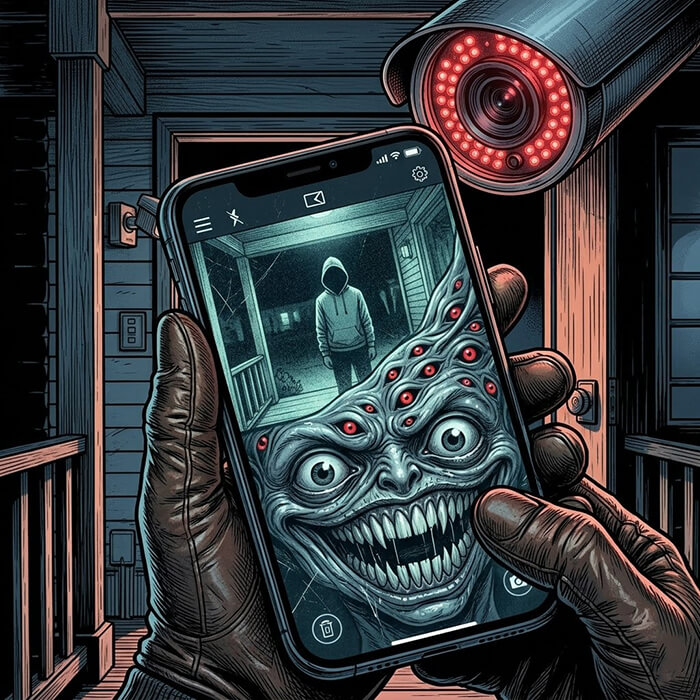
The doorbell camera was meant to make the house feel safe. Every night, it sends the same alert. Motion detected. When the narrator checks the feed, something stands just beyond the porch light—too still, too familiar. The night vision blurs the details, but recognition hits harder than clarity ever could. As winter closes in and the alerts keep coming, reassurance turns into dread. The figure never approaches. Never leaves. It only watches, patient and knowing. The Night Mode is a psychological horror about surveillance, isolation, and the terrifying realization that some threats don’t need to break in. They already know you.

Read Full Story

Dive into the complete written version below

The Night Mode

Psychological, Night Shift • 7:33

Read the full story

The Night Mode

I installed the camera because of package theft.

That’s the boring answer. The real one is that I’d started jumping at noises after my divorce—every creak in the house sounding like someone deciding whether I was worth the effort. The doorbell camera was supposed to give me peace of mind. Proof that nothing was happening.

For the first few months, it worked exactly as advertised.

Then winter came, the days shortened, and the alerts started arriving right at sunset.

Not motion alerts. Person detected.

The first time, I was standing in the kitchen. I remember because I was chopping onions and my hands were wet when my phone buzzed.

I checked the screen.

It was me.

Or something wearing me.

I stood on the porch, inches from the camera, one hand raised toward the door handle. My face was turned slightly up, eyes fixed directly into the lens.

I don’t look at myself like that. No one does unless they’re checking their reflection.

I frowned at the screen, confused, then laughed it off. Must’ve been a delay. A cached image glitching when night mode kicked in.

When I opened the door, the porch was empty.


It happened again the next night.

Same time. Same notification. Same image.

Me, frozen mid-entry.

Only this time, the image lingered longer than it should have. The app stuttered, buffering, then resumed playback—but I hadn’t moved. The version of me on-screen stayed locked in place, staring.

I watched for nearly a full minute before the feed reset.

When I checked the porch, there was nothing. No footprints. No sign anyone had been there.

I started locking my phone face-down at night.

That didn’t help. The vibration still came through the wood of my nightstand.


By the fourth night, details had changed.

The eyes were wrong.

Too dark. Not just shadowed—flat. Reflecting nothing. Like the camera couldn’t find pupils to focus on.

And the mouth—

God, the mouth.

It wasn’t smiling, exactly. Just held, tight at the corners, as if whatever was wearing my face was concentrating very hard not to grin.

I sent a support request to the company. They replied with a polite explanation about infrared misreads and recommended a firmware update.

I installed it.

That was the night the knocking started.


The sound didn’t come from the door.

It came from inside the walls.

A deep, concussive thud that rattled the picture frames. Three strikes. A pause. Then three more.

I froze in bed, heart hammering, phone lighting up with notifications I didn’t want to see.

When I opened the app, the live feed showed only darkness.

Not night darkness. Not shadow.

Absence.

The porch light should have illuminated something—steps, railing, siding—but the image was swallowed whole, like the camera was staring into a hole punched out of the world.

The door on-screen stood open.

Wide.

I checked the real door.

It was locked. Deadbolt engaged. Chain hanging loose but untouched.

The knocking stopped.

I didn’t sleep.


The next morning, the footage was gone.

Not corrupted. Not erased.

Missing.

The timeline jumped from sunset straight to sunrise.

I emailed support again. No response.

That evening, I stayed awake, sitting in the living room with the lights on and a chair pressed against the door. I told myself I was being ridiculous. I told myself exhaustion could explain anything.

At sunset, my phone buzzed.

Person detected.

The image loaded instantly this time.

I was closer now. Face filling the frame. The blackness of the eyes had spread, bleeding into the whites. Veins stood out against my skin like cracks in drying paint.

The mouth twitched.

The knocking started immediately after—violent now, shaking the hinges, booming through the house in waves.

I screamed without realizing it.

The figure on-screen reacted.

It smiled.


I don’t remember deciding to open the door.

I remember standing in front of it, hand hovering inches from the knob, mirroring the image on my phone. My reflection in the peephole warped and unfamiliar.

The knocking stopped.

My phone chimed softly.

The live feed shifted.

I was no longer on the porch.

I was in the hallway.

Standing behind myself.

The camera angle was wrong—it shouldn’t have been able to see that far inside—but there I was on-screen, inches from my own back, mouth stretched impossibly wide.

I dropped the phone.

The door handle turned easily.


The house felt heavier afterward.

Not haunted. Occupied.

Things began to move when I wasn’t looking—chairs angled differently, doors left ajar. The mirror in the bathroom fogged no matter how cold the room was.

I stopped seeing the thing on the camera.

That was worse.

Because sometimes, late at night, I’d catch movement in the reflection of the dark TV screen. A smile where mine shouldn’t be. Eyes that swallowed light.

And when I stood very still, holding my breath, I could hear something breathing with me.

Practicing.


The final alert came three weeks later.

I was sitting in my car at work, phone in hand, when the notification appeared.

Door opened.

The live feed showed my front door standing wide open, the porch empty, night yawning beyond.

Then the camera turned.

Slowly.

As if guided by a hand.

It faced inward.

Down the hallway.

Toward the living room.

Where I was no longer sitting.


I drove home at speeds I don’t remember.

The house was unlocked when I arrived.

Lights on.

Empty.

The phone buzzed one last time in my pocket.

Motion detected.

I didn’t check it.

I didn’t need to.

Because when I reached the bedroom, I saw the indentation on the mattress. Still warm. Still breathing.

And I understood.

The camera never malfunctioned.

It had just been doing its job.

Showing me who was already home.

And who hadn’t noticed they’d been replaced.
More Like This

Continue your journey into Psychological & Night Shift horror

The Shape of Nothing - Psychological Supernatural Paranormal Urban Legend Story Cover Art

The Shape of Nothing

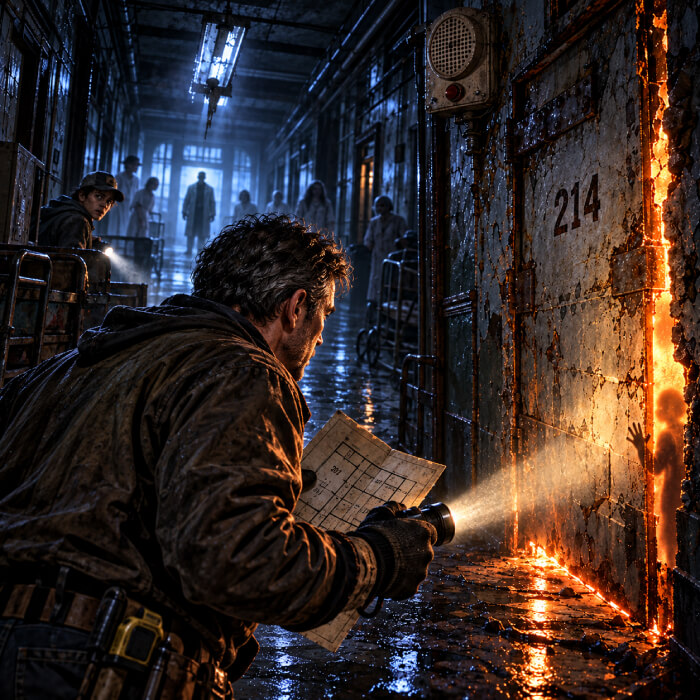
Fear isn’t always loud. Sometimes it waits in reflections, in the corners of certainty, in the things you insist don’t exist. In the isolated Fire Tower Four, skeptic Arthur dismisses legends as childish nonsense—until the storm and a companion’s warning prove that denial can be deadly. The Inverse Man is no ghost, no monster with claws or fangs. He is the void made flesh, a living absence that trades places with those who are absolutely certain he isn’t real. The Shape of Nothing is a tense, psychological horror about skepticism, cosmic rules, and the terrifying cost of certainty in a world that refuses to honor it.

[Psychological] +3
14:06
The Man They Say Never Existed - Psychological Supernatural Paranormal Mystery Urban Legend Story Cover Art

The Man They Say Never Existed

Every town has a rumor it pretends not to believe. He appears ordinary—easy to forget, impossible to ignore. If you meet his eyes, something slips away: a memory, a certainty, the feeling that your thoughts are entirely your own. People insist he isn’t real. Doctors have names for him. Files explain him neatly. But the gaps remain. As sightings accumulate and lives begin to thin at the edges, one rational mind follows the trail too closely and discovers the most dangerous truth of all: some predators don’t stalk bodies—they curate identities. The Man They Say Never Existed is a psychological horror about memory theft, institutional gaslighting, and the terror of realizing your doubts were never your own.

[Psychological] +4
7:25
White Enough to Forget The Name - Psychological Supernatural Mystery Story Cover Art

White Enough to Forget The Name

In Virel, punishment is usually a spectacle. For Rowan Hale, it is an omission. Condemned without ceremony, Rowan is sealed inside a flawless white room that shrinks, listens, and remembers. At first, it is a machine. Then it speaks. Then it learns. As the walls close and time dissolves, Rowan uncovers the city’s most carefully hidden truth: justice here is not about death, but absorption. The White Room is a psychological horror about bureaucratic cruelty, living infrastructure, and the terror of realizing you were never meant to survive—only to become part of the system.

[Psychological] +2
10:20
The Room That Hated Me - Psychological Paranormal Mystery Story Cover Art

The Room That Hated Me

In Darswyn, executions are not meant to end lives—they are meant to be remembered. Callum Hargrove is condemned not to the blade, but to a perfect white room designed to punish defiance slowly. At first, it seems empty. Harmless. Then the walls begin to move. The space tightens. Time dissolves. And the truth reveals itself: the room is alive, aware, and learning him inch by inch. As pressure replaces air and whispers replace silence, Callum discovers the king’s cruelest innovation—a prison that doesn’t kill its victims. It keeps them.

[Psychological] +2
7:01
After Midnight, Before Belief - Psychological Supernatural Dark Web Mystery Story Cover Art

After Midnight, Before Belief

Real News only appears when you aren’t looking for it. Hidden behind forgotten links and sleepless scrolling, the site claims to publish events that haven’t happened yet—disasters prevented, lives quietly saved. It asks only one thing in return: that you follow the rules. Read at the right hours. Come back every night. Never read certain names. At first, it feels like a game. Then the site starts responding. Lights turn on. Walls knock back. And when the foreword finally asks for help, leaving proves far more dangerous than staying. Real News is a psychological horror about forbidden knowledge, predatory information, and the terrifying idea that some stories don’t report reality—they create it.

[Psychological] +3
9:56
The Final Fitting - Supernatural Paranormal Night Shift Mystery Story Cover Art

The Final Fitting

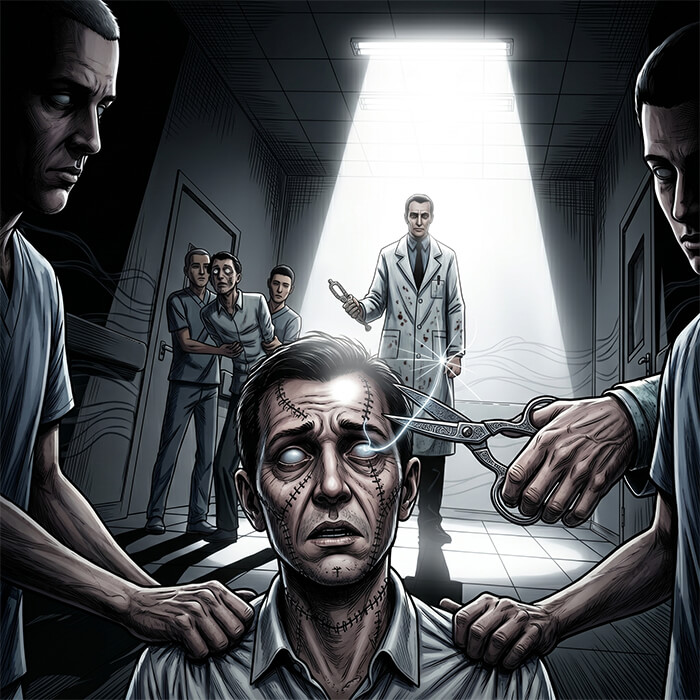
Fear is an artisan. Arthur thought he was telling a story, warning others of a monstrous tailor who reshapes souls with silver shears. But the lines between fiction and reality blur when the Tailor of Solace exists not in shadowy alleys, but in stark white corridors, under the fluorescent glare of a hospital. His instruments aren’t magical—they’re clinical. His work isn’t fantasy—it’s systematic. The Final Fitting is a psychological horror about the cost of compliance, the fragility of identity, and the terror of being measured, cut, and remade until nothing of you remains but the shape someone else designed.

[Supernatural] +3
13:12
The Quiet Place He Kept - Psychological Night Shift Story Cover Art

The Quiet Place He Kept

A late-night ATM stop becomes the first encounter with a double who enforces consequences no one else can see. Each reappearance is timed to moments of weakness, turning guilt into something physical and inescapable. As fear drives the narrator toward a quieter, more careful life, the violence stops—long enough to feel like progress. But some versions of justice don’t disappear when lessons are learned. They wait, patient and unfinished, for their turn to take over.

[Psychological] +1
10:51
I Met Myself Behind the ATM - Psychological Night Shift Mystery Story Cover Art

I Met Myself Behind the ATM

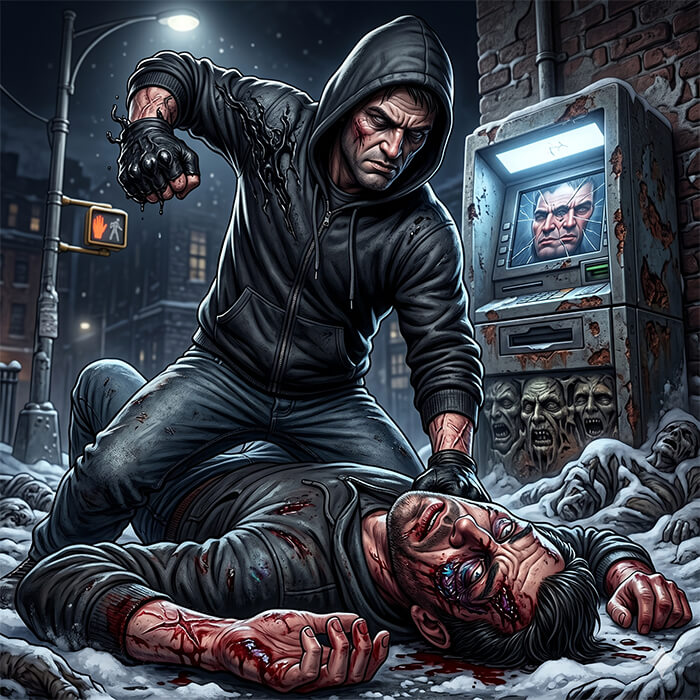
A broke bartender’s late-night trip to an ATM turns into a brutal encounter with someone who knows his face, his voice, and every bad choice he’s ever made. What begins as an impossible assault becomes a recurring punishment—one that appears only when lines are crossed and debts are ignored. As fear forces change and time dulls the wounds, the narrator believes he’s finally escaped his reckoning. But some lessons don’t end. They wait. This is a psychological horror story about guilt given a body, justice without mercy, and the terrifying moment when self-improvement gives way to something far worse.

[Psychological] +2
7:06
A Proper Host - Psychological Night Shift Story Cover Art

A Proper Host

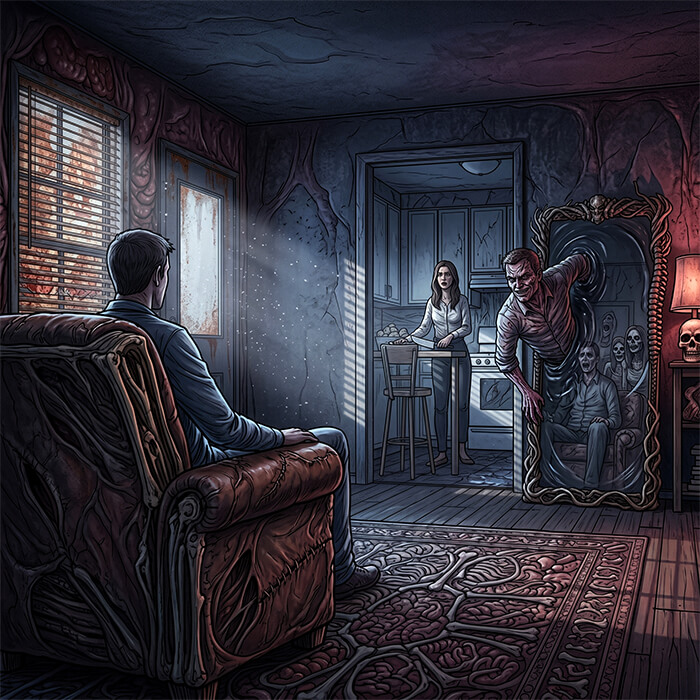
A police officer comes to the door expecting answers and finds hospitality instead—gentle conversation, practiced kindness, and a home that seems eager to put him at ease. As the visit stretches on, courtesy begins to feel like confinement, and cooperation slips quietly into consent. A Proper Host is a slow-burn psychological horror about the unsettling power of politeness, the trust placed in familiar rituals, and how fear often begins the moment we stop questioning why we feel so comfortable.

[Psychological] +1
6:11
Before I Wanted Anything - Psychological Night Shift Mystery Story Cover Art

Before I Wanted Anything

A note on the door feels thoughtful. The day unfolds smoothly. Decisions resolve themselves before becoming problems. As life grows quieter and easier, a troubling realization begins to surface—not that something is wrong, but that nothing ever is. Before I Wanted Anything is a psychological horror story about comfort, compliance, and the fear of losing desire before you notice it’s gone.

[Psychological] +2
6:15