Clean the Table Background
Clean the Table - Psychological Horror Story Cover Art - Listen Free

Clean the Table - Free Psychological Horror Story Audio

Dec 23, 2025 7:31
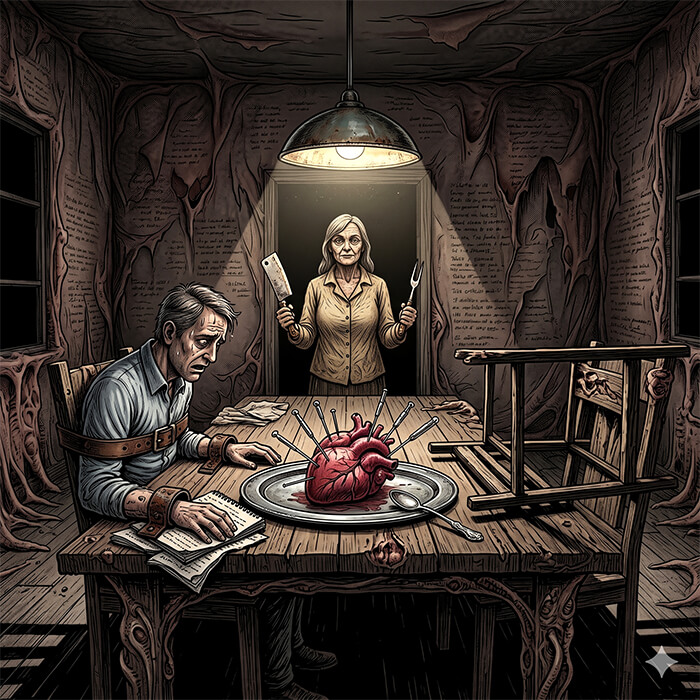
A lifetime of criticism turns the simplest act—being fed—into something transactional, then cruel. When a grown son returns to the home he once ruled with his opinions, his mother offers one final meal, prepared with patience and precision. What follows is an unsettling reckoning about entitlement, control, and the quiet fury that can grow behind domestic devotion. Clean the Table is a dark psychological horror story that explores power dynamics, parental sacrifice, and the terrifying consequences of never learning when to stop demanding more.

Read Full Story

Dive into the complete written version below

Clean the Table

Psychological, Mystery • 7:31

Read the full story

Clean the Table

Caleb learned early that hunger was negotiable.

He didn’t remember ever being truly starving—just uncomfortable enough to complain. Meals appeared on the table like clockwork, regardless of whether he liked them. That consistency bred a certain confidence. Food, to him, was something that adjusted to him.

When he didn’t like what was served, he said so.

“I don’t like onions,” he’d announce, pushing the plate away with two fingers like it was contaminated.

His mother would pause. Look at him. Then quietly take the plate and scrape it clean into the trash.

No yelling. No lectures.

Just the sound of food hitting plastic.

It unsettled him at first. Most of his friends’ parents argued, pleaded, bargained. His mother didn’t do any of that. She simply removed the meal and went about her evening.

If he was hungry later, he found cereal in the cupboard.

That was the arrangement.


As he grew older, his opinions sharpened.

At ten, he declared soup “lazy food.”
At thirteen, he accused her of “not understanding flavors.”
At sixteen, he critiqued textures, temperatures, seasoning levels with the seriousness of a judge on a cooking show.

She listened.

Always listened.

Sometimes she nodded.

Sometimes she smiled faintly, as if committing something to memory.

Caleb mistook that silence for defeat.

By the time he moved out, he’d refined his palate enough to be insufferable.

He returned home rarely—holidays mostly—and when he did, he treated the meals like performances he’d paid for. His mother cooked anyway. Roasts. Stews. Baked goods that filled the house with warmth and memory.

He picked them apart.

“This is overdone.”
“This tastes rushed.”
“You didn’t let this rest long enough.”

Family dinners became tense, then short, then infrequent.

His father eventually stopped inviting him.


Years passed.

Caleb built a life that required little patience. Microwave dinners. Takeout. Restaurants where mistakes were comped and apologies plentiful. He married briefly. Divorced quickly.

When his father died, he returned home out of obligation more than grief.

The house felt smaller. Quieter. Too clean.

His mother had aged in subtle ways—hands thinner, hair lighter—but her posture was unchanged. Upright. Attentive.

“I made something,” she said when he arrived. “I wasn’t sure how long you’d stay.”

He sighed. “You didn’t have to.”

“I wanted to.”

The table was set for one.

The meal was… fine.

Perfectly edible. Nothing remarkable. Nothing offensive.

He still found fault.

“This needs salt,” he said, reaching for the shaker.

Her hand stopped him mid-motion.

“Try it first,” she said gently.

He rolled his eyes but complied.

Chewed. Swallowed.

“Yeah,” he said. “Salt.”

She nodded. Sat down across from him. Didn’t eat.

That should have bothered him.

It didn’t.


He stayed the night.

The guest room smelled faintly of lemon cleaner and something else—something metallic, maybe. He slept poorly.

When he woke, he was sitting at the dining table.

That was the first thing he noticed.

The second was the weight around his wrists.

Zip ties. Tight. Cutting off circulation.

Panic surged, immediate and hot.

“Mom?” he croaked.

She stood at the stove, back to him, stirring something slowly.

“Good morning,” she said.

“Untie me. What the hell is this?”

She turned.

In her hands was a ladle. On the counter beside her: a series of covered dishes, arranged neatly, like courses.

“You’re hungry,” she said.

“No,” he snapped. “I’m scared.”

She considered that.

“Hunger feels like fear sometimes.”


She set a plate in front of him.

It was familiar. Something she’d made often when he was young.

He stared at it.

“I’m not eating that.”

She didn’t respond.

He pulled against the ties. The chair creaked.

“You’ve lost your mind,” he said. “I’ll call the police. I swear to God—”

She lifted something from beneath the table.

A heavy object. Black. Cold.

She rested it gently on her lap.

Caleb went silent.

“You’ll eat,” she said. “Then we’ll talk.”

The first bites were forced.

Gagged down between shallow breaths and rising terror. She watched every chew. Every swallow.

When he finished the plate, he slumped back, chest heaving.

“Good,” she said, collecting the dish.

Relief washed through him—until she placed another plate down.

“This one too.”

His voice cracked. “I did what you wanted.”

“You did what you always do,” she replied. “You judged it. You endured it. You didn’t appreciate it.”

“I said thank you!”

She smiled faintly.

“No. You consumed.”


Course after course followed.

Foods from his childhood. Dishes he’d insulted. Meals he’d rejected.

His stomach bloated painfully. His throat burned. He vomited once and was made to eat that plate again, cleaner this time.

Between bites, she spoke.

“You don’t know what it’s like,” she said calmly, “to feed someone who never wants what you make. To pour effort into something just to watch it be dismantled with words.”

He cried. Apologized. Promised to change.

She nodded, as if acknowledging weather.

When the final plate came, it was empty.

He sobbed in relief.

She slid it toward him anyway.

“Finish,” she said.

“There’s nothing on it,” he whispered.

She tilted her head.

“Isn’t there?”

The plate was ceramic. Thick. White.

He shook his head violently. “No. No, please.”

She raised the object in her lap just enough to remind him.


Hands trembling, he lifted the plate.

Bit down.

The sound was unbearable.

Pain exploded across his mouth. Blood filled his throat. He screamed, shards cutting gums, tongue, cheeks.

He chewed because stopping hurt more.

Swallowed because choking would be worse.

When it was over, he collapsed forward, sobbing wetly.

She reached out.

Stroked his hair.

“There,” she said softly. “Now you know.”


They found him days later.

Seated at the table. Chair overturned. Mouth ruined.

The plates were gone.

So was she.

In the kitchen sink, soaking in soapy water, was a single note written neatly on a recipe card:

He finally finished his meal.

I think he liked it.
More Like This

Continue your journey into Psychological & Mystery horror

The Shape of Nothing - Psychological Supernatural Paranormal Urban Legend Story Cover Art

The Shape of Nothing

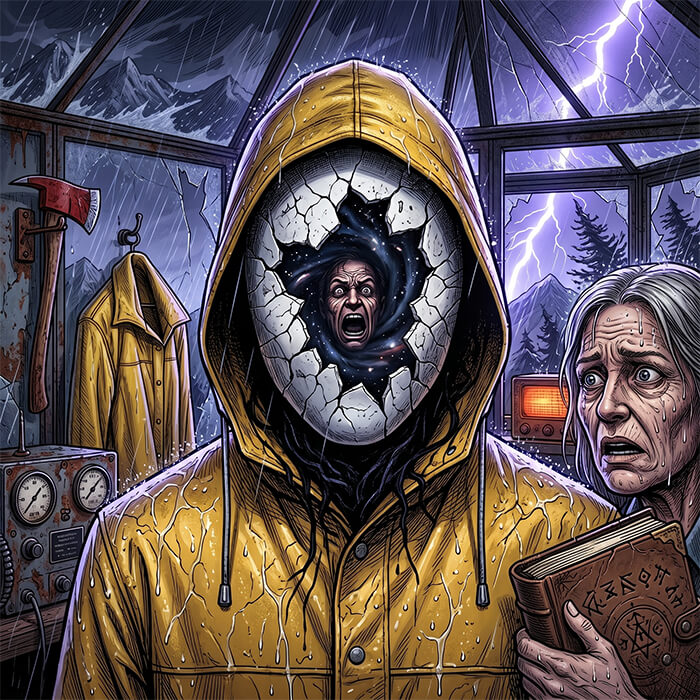
Fear isn’t always loud. Sometimes it waits in reflections, in the corners of certainty, in the things you insist don’t exist. In the isolated Fire Tower Four, skeptic Arthur dismisses legends as childish nonsense—until the storm and a companion’s warning prove that denial can be deadly. The Inverse Man is no ghost, no monster with claws or fangs. He is the void made flesh, a living absence that trades places with those who are absolutely certain he isn’t real. The Shape of Nothing is a tense, psychological horror about skepticism, cosmic rules, and the terrifying cost of certainty in a world that refuses to honor it.

[Psychological] +3
14:06
The Man They Say Never Existed - Psychological Supernatural Paranormal Mystery Urban Legend Story Cover Art

The Man They Say Never Existed

Every town has a rumor it pretends not to believe. He appears ordinary—easy to forget, impossible to ignore. If you meet his eyes, something slips away: a memory, a certainty, the feeling that your thoughts are entirely your own. People insist he isn’t real. Doctors have names for him. Files explain him neatly. But the gaps remain. As sightings accumulate and lives begin to thin at the edges, one rational mind follows the trail too closely and discovers the most dangerous truth of all: some predators don’t stalk bodies—they curate identities. The Man They Say Never Existed is a psychological horror about memory theft, institutional gaslighting, and the terror of realizing your doubts were never your own.

[Psychological] +4
7:25
White Enough to Forget The Name - Psychological Supernatural Mystery Story Cover Art

White Enough to Forget The Name

In Virel, punishment is usually a spectacle. For Rowan Hale, it is an omission. Condemned without ceremony, Rowan is sealed inside a flawless white room that shrinks, listens, and remembers. At first, it is a machine. Then it speaks. Then it learns. As the walls close and time dissolves, Rowan uncovers the city’s most carefully hidden truth: justice here is not about death, but absorption. The White Room is a psychological horror about bureaucratic cruelty, living infrastructure, and the terror of realizing you were never meant to survive—only to become part of the system.

[Psychological] +2
10:20
The Room That Hated Me - Psychological Paranormal Mystery Story Cover Art

The Room That Hated Me

In Darswyn, executions are not meant to end lives—they are meant to be remembered. Callum Hargrove is condemned not to the blade, but to a perfect white room designed to punish defiance slowly. At first, it seems empty. Harmless. Then the walls begin to move. The space tightens. Time dissolves. And the truth reveals itself: the room is alive, aware, and learning him inch by inch. As pressure replaces air and whispers replace silence, Callum discovers the king’s cruelest innovation—a prison that doesn’t kill its victims. It keeps them.

[Psychological] +2
7:01
After Midnight, Before Belief - Psychological Supernatural Dark Web Mystery Story Cover Art

After Midnight, Before Belief

Real News only appears when you aren’t looking for it. Hidden behind forgotten links and sleepless scrolling, the site claims to publish events that haven’t happened yet—disasters prevented, lives quietly saved. It asks only one thing in return: that you follow the rules. Read at the right hours. Come back every night. Never read certain names. At first, it feels like a game. Then the site starts responding. Lights turn on. Walls knock back. And when the foreword finally asks for help, leaving proves far more dangerous than staying. Real News is a psychological horror about forbidden knowledge, predatory information, and the terrifying idea that some stories don’t report reality—they create it.

[Psychological] +3
9:56
The Man They Say Never Existed - Psychological Supernatural Paranormal Mystery Urban Legend Story Cover Art

The Man They Say Never Existed

Every town has a rumor it pretends not to believe. He appears ordinary—easy to forget, impossible to ignore. If you meet his eyes, something slips away: a memory, a certainty, the feeling that your thoughts are entirely your own. People insist he isn’t real. Doctors have names for him. Files explain him neatly. But the gaps remain. As sightings accumulate and lives begin to thin at the edges, one rational mind follows the trail too closely and discovers the most dangerous truth of all: some predators don’t stalk bodies—they curate identities. The Man They Say Never Existed is a psychological horror about memory theft, institutional gaslighting, and the terror of realizing your doubts were never your own.

[Psychological] +4
7:25
The Final Fitting - Supernatural Paranormal Night Shift Mystery Story Cover Art

The Final Fitting

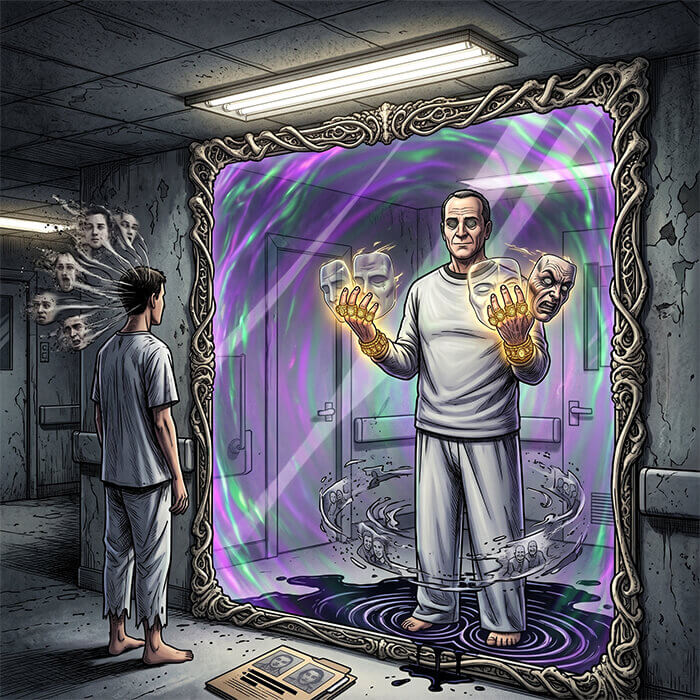
Fear is an artisan. Arthur thought he was telling a story, warning others of a monstrous tailor who reshapes souls with silver shears. But the lines between fiction and reality blur when the Tailor of Solace exists not in shadowy alleys, but in stark white corridors, under the fluorescent glare of a hospital. His instruments aren’t magical—they’re clinical. His work isn’t fantasy—it’s systematic. The Final Fitting is a psychological horror about the cost of compliance, the fragility of identity, and the terror of being measured, cut, and remade until nothing of you remains but the shape someone else designed.

[Supernatural] +3
13:12
White Enough to Forget The Name - Psychological Supernatural Mystery Story Cover Art

White Enough to Forget The Name

In Virel, punishment is usually a spectacle. For Rowan Hale, it is an omission. Condemned without ceremony, Rowan is sealed inside a flawless white room that shrinks, listens, and remembers. At first, it is a machine. Then it speaks. Then it learns. As the walls close and time dissolves, Rowan uncovers the city’s most carefully hidden truth: justice here is not about death, but absorption. The White Room is a psychological horror about bureaucratic cruelty, living infrastructure, and the terror of realizing you were never meant to survive—only to become part of the system.

[Psychological] +2
10:20
The Room That Hated Me - Psychological Paranormal Mystery Story Cover Art

The Room That Hated Me

In Darswyn, executions are not meant to end lives—they are meant to be remembered. Callum Hargrove is condemned not to the blade, but to a perfect white room designed to punish defiance slowly. At first, it seems empty. Harmless. Then the walls begin to move. The space tightens. Time dissolves. And the truth reveals itself: the room is alive, aware, and learning him inch by inch. As pressure replaces air and whispers replace silence, Callum discovers the king’s cruelest innovation—a prison that doesn’t kill its victims. It keeps them.

[Psychological] +2
7:01
After Midnight, Before Belief - Psychological Supernatural Dark Web Mystery Story Cover Art

After Midnight, Before Belief

Real News only appears when you aren’t looking for it. Hidden behind forgotten links and sleepless scrolling, the site claims to publish events that haven’t happened yet—disasters prevented, lives quietly saved. It asks only one thing in return: that you follow the rules. Read at the right hours. Come back every night. Never read certain names. At first, it feels like a game. Then the site starts responding. Lights turn on. Walls knock back. And when the foreword finally asks for help, leaving proves far more dangerous than staying. Real News is a psychological horror about forbidden knowledge, predatory information, and the terrifying idea that some stories don’t report reality—they create it.

[Psychological] +3
9:56